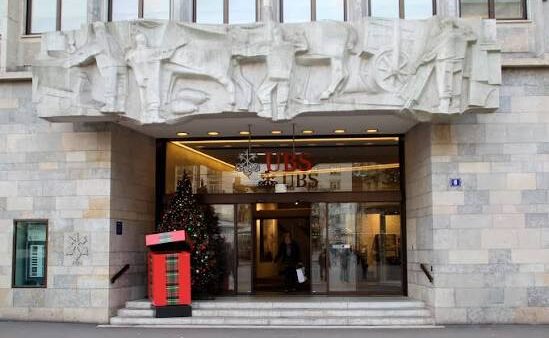

UBS is planning a large round of job cuts in November that could particularly affect experienced private bankers. How many employees are being placed on the list this time?
According to a report by a local financial blog, the bank’s costly senior private bankers over 50, who manage client books worth CHF 1 billion to 2 billion, are particularly at risk. The reasoning is cost: UBS wants to replace expensive staff with juniors, expecting clients to stay with the bank.
UBS did not respond to these specific claims. But in the past, UBS said that it expects about 3,000 job losses in Switzerland linked to the Credit Suisse integration, and had reached about 1,500 by February,
Notably, in 1998, UBS and Credit Suisse together cut about 10,000 jobs, so the 3,000 Swiss figure is smaller than that earlier wave.
Group-wide, UBS’s full-time-equivalent headcount fell by roughly 2,500 in the second quarter to just above 99,000, below 100,000 for the first time since the Credit Suisse takeover. The total headcount, including external staff, was about 112,400, down roughly 4,500 from the end of March.
Is it possible that the bank will end up with no more than 90,000 staff worldwide and a little over 25,000 in Switzerland?
UBS has not announced a final headcount goal, but multiple local reports suggest the workforce is expected to decline sharply by early 2027.
Why Now?
UBS CEO Sergio Ermotti said in spring that a further large round of cuts would come in the second half of 2026 and early 2027, once the migration of Credit Suisse clients onto UBS systems was largely complete.
The bank’s goal is a cost-income ratio of 67 or lower, meaning no more than 67 cents of costs for every dollar of revenue. Furthermore, AI use will be decisive in future reductions.
Unemployment among bank staff reached 3.5% in June, up from 2.9% a year earlier, according to the Swiss Bank Employees Association, which says bank unemployment is at its highest since the 2010 financial-crisis period.
The union is calling on UBS to extend its social plan, which currently runs to the end of 2026, without cuts.
UBS has also committed not to dismiss people over 58. Hence, staff that age are kept on in projects until they take early retirement from 60. The bank employees’ association as welcoming that approach. That is a relevant counterweight to the claim that older staff are uniquely exposed, though it applies to the over-58s, not all 50-plus staff.
However, UBS’s 3,000-layoff ceiling could be suspended if politicians impose exorbitant regulatory costs on the bank. UBS is now fighting proposed capital rules that it says could require about USD 16 billion in additional CET1 capital.
Ermotti said in a CNBC interview on 6 October 2026 that UBS “needs to be in the US to be successful” and is investing in its capabilities there. Bloomberg read that as a sign he is unwilling to consider cutbacks to meet Switzerland’s capital requirements.
UBS Could Emerge Fundamentally Changed From Its Dispute With Swiss Authorities Over Post-Credit Suisse Capital Requirements
Recently, UBS suffered a setback in Switzerland’s parliament after the Council of States backed a proposal requiring the bank to fund 90% of the value of its foreign subsidiaries with top-quality equity capital.
The rules could make it more difficult for UBS to operate a global investment bank and major international wealth-management business from Switzerland.
UBS may eventually keep its Swiss corporate, retail, and private banking operations at home while separating some international activities. A recent Bloomberg article by Paul J. Davies presents several possible outcomes, including UBS leaving Switzerland, receiving a takeover offer or splitting parts of its business.
The debate follows the 2023 collapse of Credit Suisse and the government-backed takeover by UBS. Swiss authorities want the country’s largest bank to hold more capital at its Swiss parent to reduce the potential cost to taxpayers if it faces another crisis.
Meanwhile, UBS argues that the proposed rules are excessive and could damage its competitiveness.
Read More: Former UBS Technology Head Paul McEwen Joins Citi