Zurich has completed a third of its ten-year street-greening target in the plan’s first reporting year, but has made much slower progress on changing road space for pedestrians, cyclists and public transport. The contrast raises a question for the years ahead. How much of the early success can the city repeat without another project on the scale of the Überlandpark?
City voters approved two counter-proposals to urban climate initiatives on 22 September 2024. They require Zurich to reallocate 462,000 square metres of road space for walking, cycling and public transport, and to green or plant trees on a further 145,000 square metres. The ten-year implementation period began on 1 May 2025.
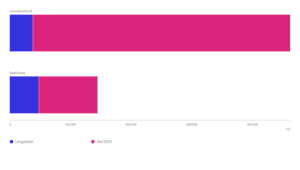
So far, 8.3% of the target has been achieved for walking, cycling and public transport, and 33.3% for greening.
Read More: Does UBS Technology Executive’s Reported Exit Signal Tensions Over AI Strategy?
Between May 2025 and April 2026, the city recorded 48,311 square metres of additional green space and 38,304 square metres for those transport modes. That amounts to 33.3% of the greening target and 8.3% of the road-reallocation target, according to Zurich’s first annual progress report.
Much of the greening figure comes from the Überlandpark in Schwamendingen, built above a covered section of the A1 motorway and completed in 2025. The park alone accounts for 27% of the ten-year greening target, according to a Keystone-SDA report published by Swissinfo. City councillor Simone Brander acknowledged at Monday’s presentation that it was a one-off contribution unlikely to be matched by a single project in the coming years.
Smaller schemes are still in the pipeline. Work at Winzerhalde in Höngg includes 45 additional trees, unsealed ground and a shared street space. At Sihlquai, the city plans to plant new trees and narrow lanes, but the project still awaits cantonal approval. Could objections and approval procedures delay other street changes?
The way projects count towards the targets is also contested. Silas Hobi, director of campaign group Umverkehr, questioned whether the park above a motorway should count as converted road space. The group has separately criticised the approved Affoltern tram project, arguing that its planned road widening and tree removals run counter to the city’s greening goals. Those are the campaign group’s objections, not findings in the city’s progress report.
The city plans to publish an update every year. For now, its own figures show substantial early progress on greening, helped heavily by the Überlandpark, alongside a much longer way to go on reallocating streets for everyday travel.