Sporadic sightings of the Northern Lights were reported across Switzerland on Saturday evening, 10 October 2026, and into Sunday morning. Meteorologist Daniel Gerstgrasser described the display as “weak but clearly identifiable” and said it was visible on several MeteoSwiss webcams.
The auroras were faint and not visible everywhere. Cloud cover blocked the view in many areas, though clearer skies in western Switzerland, including around Galmiz in Fribourg, gave some observers a better chance.
Aktuell schwaches, aber eindeutiges #Polarlicht über der Schweiz! Schön zu sehen auf einigen Webcams von @meteoschweiz. https://t.co/NwJKZq3MkS pic.twitter.com/8eovcjY2IP
— Daniel Gerstgrasser (@danivumalvier) October 10, 2026
The display was driven by heightened solar activity. MeteoSwiss explains that the Sun ejects large quantities of electrically charged particles, which can reach Earth within one to five days.
Earth’s magnetic field deflects those particles towards the poles, where they collide with oxygen and nitrogen molecules in the atmosphere, producing the characteristic light displays. During periods of particularly intense solar activity, the Northern Lights can become visible at lower latitudes, including Switzerland.
EarthSky reported that a powerful coronal mass ejection struck Earth on October 10, driving a G3 (strong) geomagnetic storm with a Kp index of 7. Such conditions make auroras possible at mid-latitudes, including parts of Europe.
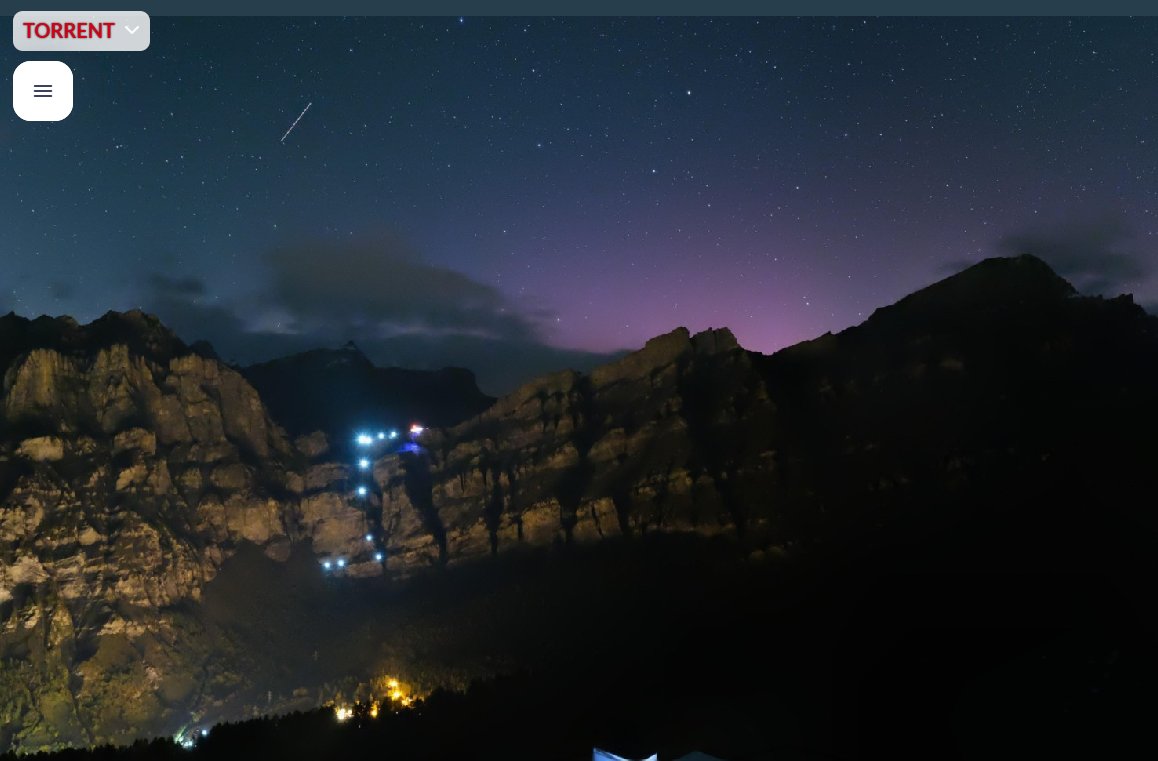
The display was captured on MeteoSwiss webcams, including one at Torrent near Leukerbad shortly after 7pm on Saturday. Another image was taken from the Col du Mont Crosin in the Bernese Jura.
MeteoSwiss operates around 35 weather cameras across Switzerland, several of which are equipped with night-mode imaging capable of capturing auroras.
READ MORE: Ricardo Data Breach: Scammers Now Using Leaked Details In WhatsApp Phishing Messages
Auroras Are Normally Confined To High-Latitude Regions Near The Poles
The phenomenon was not limited to Switzerland. Auroras were also reported in France, Germany, Belgium, the Netherlands, Spain and the UK during the same night.
Auroras are normally confined to high-latitude regions near the poles. For them to appear in Switzerland, solar activity must be strong enough to push the auroral oval much further south than usual.
Even then, visibility depends on more than geomagnetic activity. Clear skies, darkness and an unobstructed view of the northern horizon are all required. Cloud cover and light pollution can easily prevent a sighting, even during a strong storm.
EarthSky reported that geomagnetic activity was expected to remain elevated early on October 11, with G1 to G2 storm levels likely and a slight chance of another G3 interval. Conditions were forecast to ease later in the day.
For anyone hoping to catch a display, the advice is to find a dark location with a clear view of the northern horizon and check real-time space-weather forecasts rather than relying on chance.