On 11 May 2026, the Swiss Federal Railways, SBB, announced signing a letter of intent with Eurostar and SNCF Voyageurs to strengthen the partnership between the two companies and develop new routes, including a potential direct connection between Switzerland and London.
“Direct connections with a journey time of 6 hours between Zurich and London, 5 hours between Basel and London, and 5.5 hours between Geneva and London should meet market demand and the expectations of international travellers,” the announcement said.
The agreement, however, is not a service launch. But the statement of intent is being seen as significant, backed shortly afterwards by a trilateral commercial accord between Eurostar, Swiss Federal Railways (SBB-CFF-FFS), and SNCF Voyageurs.
🚄🇬🇧🇨🇭 London–Switzerland by direct train?
SBB and @Eurostar partners SNCF Voyageurs sign an MoU to explore through‑services to Basel, Geneva & Zurich.
• 5–6 hour journey times could reshape UK–Swiss travel
Read more: https://t.co/vCCOltT6Lj#UKRail #Eurostar #HighSpeedRail… pic.twitter.com/8YCMRfMHtd
— Rail Technology Magazine (@thertmnews) May 11, 2026
A Boon For People With Aerophobia?
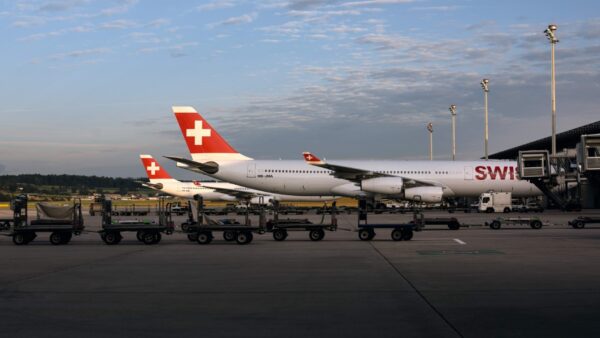
Proposed journey times place London-Basel at around five hours, London-Geneva at five and a half, and London-Zurich at roughly six. Against those figures, flying looks faster. Swiss, British Airways, and easyJet cover the distance in under two hours of air time. But door-to-door, accounting for airport transfers, check-in, and security, the total travel time by air runs to four or five hours. A direct train, departing from the centre of London and arriving in the heart of a Swiss city, would be genuinely competitive.
London is currently Switzerland’s busiest air route. Indirect Eurostar connections via Paris already attract strong demand. The market case, operators say, is clear.
The route would pass through the Channel Tunnel and across French territory before entering Switzerland, making French participation essential rather than optional. SNCF Voyageurs’ involvement in the trilateral agreement reflects that reality.
The Obstacles Are Real
Political endorsement is one thing. Running trains is another. Several layers of complexity must be resolved before any service departs.
Border controls present the first challenge. The United Kingdom left the European Union’s Schengen zone; Switzerland, while not an EU member, is part of Schengen. A direct London-Zurich train would cross three distinct regulatory jurisdictions. Customs and security protocols, currently handled at London St Pancras and Paris for Eurostar’s existing services, would require a new trilateral framework between the UK, France, and Switzerland.
Rolling stock is the second constraint. Eurostar’s Siemens Velaro e320 trains are technically compatible with Switzerland’s 15 kV AC electrification system and ETCS Level 2 signalling, but they require formal Swiss certification and likely further adaptation. SBB, meanwhile, is procuring up to 40 new high-speed trains, with delivery expected in the 2030s. No suitable fleet is ready today.
Infrastructure capacity adds a third layer of difficulty. French rail routes between the Channel Tunnel and the Swiss border are already congested. Channel Tunnel slot availability is limited. Any new direct service must be threaded into an already strained network.
Albert Rösti is expected to present the working group’s recommendations to the Swiss Federal Council in 2026. A realistic service launch, if all conditions are met, falls in the early 2030s at the earliest.
Read More: Hantavirus Reaches Switzerland: One Confirmed Infected in Deadly Outbreak – Helvetica Times
What Are the Stakes For Switzerland?
For Switzerland, the stakes extend beyond tourism. The country is not an EU member, but it depends on bilateral agreements to integrate with European transport networks. A direct London connection, negotiated outside EU structures, would demonstrate that such bilateral rail pacts can work, and could serve as a model for future non-EU connectivity.
For now, the London-Zurich traveller still books a flight. But the conversation has moved from whether a direct train is possible to when, and that is a meaningful shift.