A massive, unstable rock formation looming above the Swiss Alpine village of Kandersteg is at risk of collapse, as thawing permafrost destabilizes the mountainside in a scenario scientists say could rival last year’s devastating landslide in nearby Blatten.
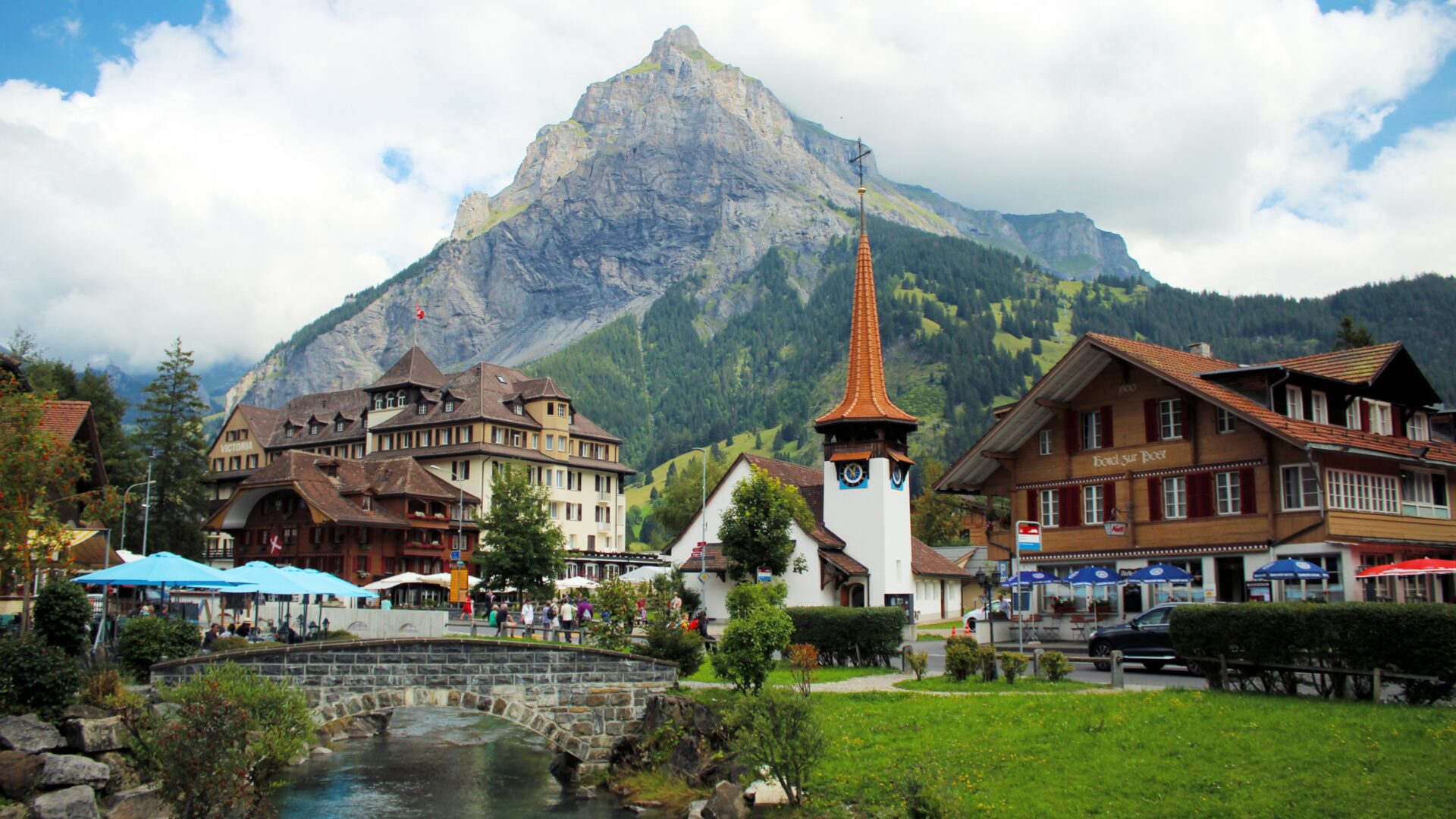
Kandersteg, home to around 1,300 people in the canton of Bern, sits in a classic Alpine setting of jagged peaks, glaciers and green valleys. Overhead looms Spitze Stei, a rocky outcrop that has become increasingly unstable as the permafrost that holds it together thaws.
Local resident Brigitte Jüni described the unusual calm many villagers feel despite the risk. “You know it’s happening, but you’re not scared,” she said, noting that authorities have implemented every precaution available. “But it’s nature. It’s nature, and you can never predict,” she added.
The village is not currently in immediate danger, and no evacuations have been ordered, though contingency plans are ready should conditions change.
Read More: Lake Zurich Boat Services Cancelled: Water Level Drops
Kandersteg On Alert Over Rock Collapse Risk: Scale Of The Threat
If the entire unstable section of Spitze Stei were to give way, it could involve between 15 and 20 million cubic meters of rock, a volume that could trigger a catastrophic landslide. The formation is under continuous surveillance, and evacuation strategies are already in place. Experts say any collapse is more likely to happen gradually rather than in a single sudden event.
Local resident Rudolf Isler argued that Kandersteg’s situation differs fundamentally from what happened in Blatten. “We are not concerned about the Spitze Stei rock. We’ve witnessed stones falling from there for many years,” he said. “The real issue lies with global warming and rising temperatures.”
The concern draws directly on memories of May 2025, when a massive mass of rock and ice broke away from a glacier in the Lötschental valley and cascaded down the mountainside, burying much of the village of Blatten in mud and debris. Blatten had already been evacuated as a precaution before the collapse occurred.
Markus Stoffel, a professor specializing in climate change and natural hazards at the University of Geneva, explained the underlying mechanism connecting these events. “There’s a substantial amount of ice in the mountains and within the loose debris,” he said. “As this ice melts, it ceases to act like cement, leading to increased instability in these mountain slopes.”
A Warming-Driven Pattern Across The Alps
Rising temperatures linked to climate change are melting both glaciers and permafrost throughout the Swiss Alps, increasing landslide risk well beyond any single village. Nathan Solothurnmann, a climate and energy specialist with Greenpeace Switzerland, warned that such events are likely to become more frequent.
“Perhaps one day we may need to abandon certain valleys or villages because living conditions will become untenable,” Solothurnmann said, “or the measures required to safeguard infrastructure could be so costly that it may no longer be feasible to reside there.”
For now, Kandersteg remains inhabited and watchful, caught between routine mountain life and the long-term reality that a warming climate is reshaping the stability of the terrain around it.