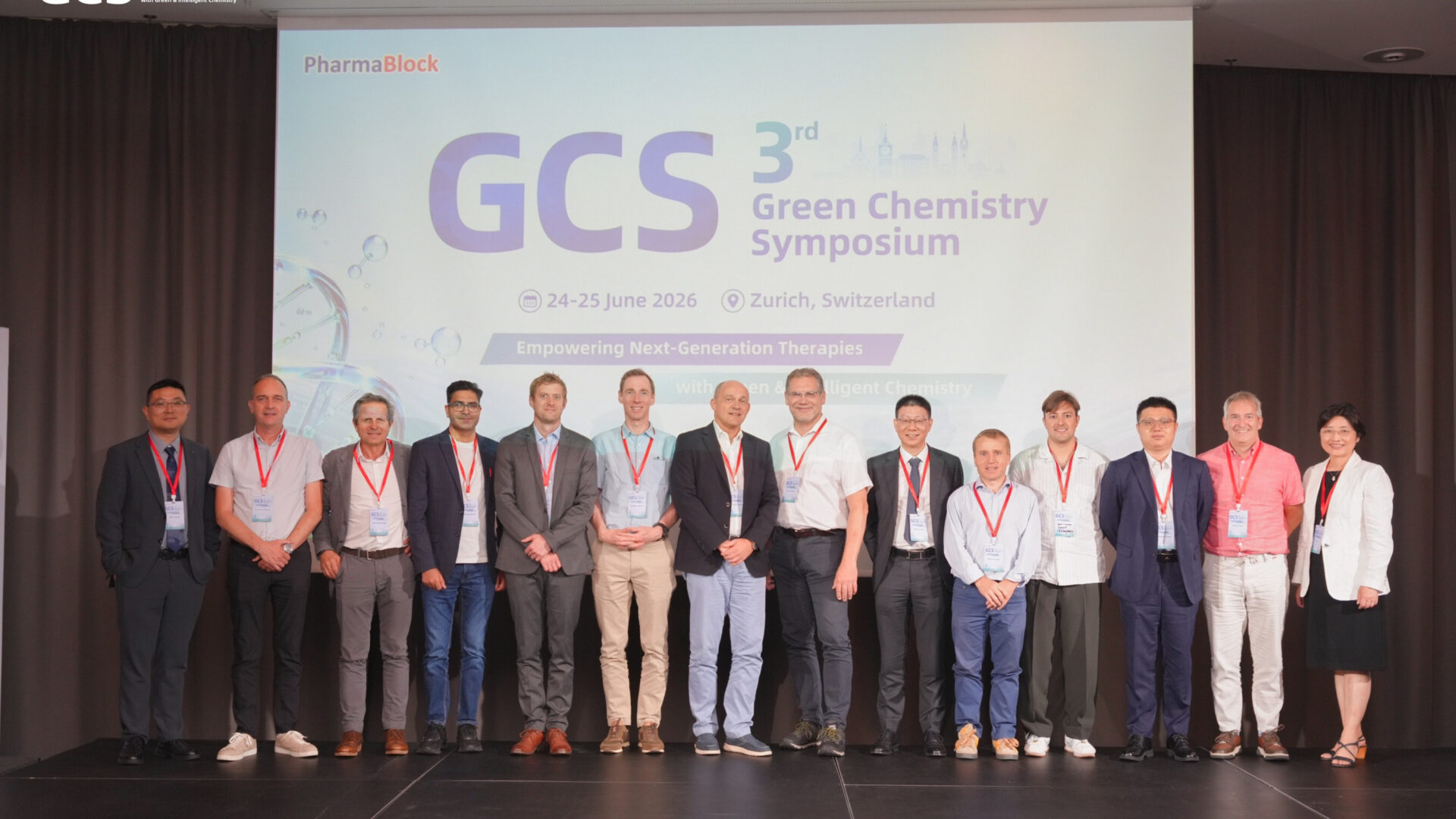
Pharma companies and researchers gathered in Zurich this week as the industry faces growing pressure to cut emissions, reduce waste and make drug manufacturing more sustainable. The PharmaBlock’s 3rd Green Chemistry Symposium (GCS) explores how green chemistry and process innovation can accelerate the decarbonization of pharmaceutical manufacturing.
The event brought together experts from Novartis, Pfizer, Boehringer Ingelheim, Sanofi, AstraZeneca, ETH Zurich, the University of Zurich and the University of British Columbia.
Discussions centred on green chemistry, process innovation and pharmaceutical decarbonization. Organisers said the focus was not just on improving individual steps in production, but on rethinking the way medicines are made from the ground up.
That shift matters because pharmaceutical manufacturing is under increasing scrutiny for its environmental footprint, especially its use of solvents, waste generation, and energy intensity. Green chemistry is increasingly seen as a practical way to lower those impacts while also improving process efficiency and supply-chain resilience.
Read More: Protest Outside FIFA Headquarters In Zurich
A Swiss Green-Tech Innovation Hub In Zurich? Push Towards Greener Drug Manufacturing
The timing of the Zurich meeting was deliberate: Europe has just experienced one of its hottest Junes on record, with heatwaves reinforcing the urgency of climate action.
Ahead of the symposium, PharmaBlock opened its Swiss Green-Tech Innovation Hub in Zurich, calling it a regional platform for continuous-flow technologies and green chemistry development. The company says the hub will support process development, scale-up services and greener production methods for drug manufacturing in Europe.
PharmaBlock also highlighted its integrated flow-manufacturing platform and continuous-flow liquid-phase peptide synthesis system as examples of how cleaner production can be scaled up in practice. The company said the new setup is intended to reduce procurement risks and support faster, more sustainable drug research and development.
The symposium also reflected a broader industry trend toward continuous flow, photochemistry, electrochemistry and AI-assisted process development, all of which are being used to cut waste and speed up manufacturing. In that sense, Zurich is being positioned not just as a venue for a conference, but as part of the sector’s shift toward a lower-carbon production model.