
Unemployment across the euro area held stable at 6.3% in April 2026, unchanged from both the previous month and a year earlier, as a modest fall in youth unemployment offered one of the brighter data points in an otherwise flat European labour market, according to figures published Monday by Eurostat.
In the euro area, the unemployment rate for women was 6.5%, down from 6.6% in March 2026, and the unemployment rate for men was 6.0% in April 2026, also down from 6.1% in March 2026.
The total number of unemployed people in the euro area fell by 84,000 between March and April to reach 11.075 million. Over the same period, the EU-wide figure, which covers all 27 member states, dipped by 137,000 to 13.238 million, keeping the broader EU unemployment rate at 6.0%.
Euro Area Unemployment: Youth Unemployment Improves
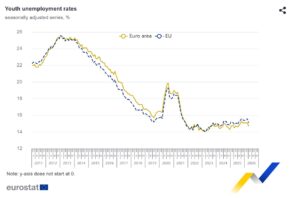
The most encouraging signal in the April data came from young workers. The youth unemployment rate in the euro area dropped from 15.1% in March to 14.7% in April, a fall of 50,000 people. Across the EU as a whole, the youth rate fell from 15.6% to 15.1%. While these rates remain alarmingly high, nearly one in six young people actively seeking work in the euro area cannot find it, the direction of travel in April was positive.
The picture across individual countries, however, remains highly uneven. Spain’s youth unemployment rate stands at 23.7%, France’s at 21.4%, and Finland’s at 22.2%. At the other end of the scale, Germany reported a youth rate of just 7.2%, while the Netherlands came in at 8.7%.
The Swiss Position
Switzerland is not an EU or euro area member, but Eurostat includes it in its comparative data as a reference country. The April 2026 figure for Switzerland is not yet available in this release. The most recent comparable reading, from March 2026, put Switzerland’s unemployment rate at 5.0%, above the EU-wide average of 6.0% but measured on a different national basis and reflecting a tighter labour market by most other indicators.
Switzerland’s youth unemployment rate in March stood at 8.5%, well below the EU average and among the lowest of any country in the Eurostat comparison table.
The Iran conflict and its effects on energy prices, shipping costs and business confidence have yet to fully feed through into labour markets, which typically lag other indicators by several months.