
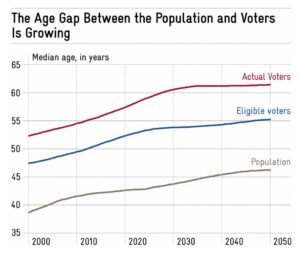
The median age of people who actually vote in Swiss referendums and elections has reached 60, meaning half of all ballots are cast by Swiss voters aged 60 or over, according to new analysis by Avenir Suisse.
The finding raises fundamental questions about whether Switzerland’s cherished direct democracy truly reflects the will of all generations.
The gap between the age of the Swiss population and the age of those who actually decide policy at the ballot box has never been wider.
“As the electorate grows older, political influence increasingly reflects the preferences of older generations,” finds Avenir Suisse.
The median age of the Swiss population stands at roughly 43, and the median age of all eligible voters is about 53.5. The median age of those who actually cast a vote, however, is almost 60, some six years older still. Since 2000, that figure has risen by 7 years.
Read More: Swiss Median Salary Jumps To CHF 87,000: The Sharpest Rise In Years
Older Swiss Voters Turn Out At Roughly Double The Rate Of Younger Ones
The core explanation is simple: older Swiss voters turn out at roughly double the rate of younger ones. While participation among those aged 60 and over regularly exceeds 60%, fewer than one in three voters aged 20 to 30 cast a ballot. Between 2020 and 2024, the participation gap between young and old widened to 15% points, Avenir Suisse found.
Population ageing compounds the effect. Switzerland’s electorate is itself getting older, which amplifies the already pronounced difference in turnout rates between age groups. The result is that retirees and those approaching retirement are increasingly the dominant force in referendum outcomes, on topics that may affect younger generations most acutely.
Read More: Swiss Voters Deliver Defeat To SVP’s Anti-Immigration Agenda
Avenir Suisse Warns That The Trend Should Not Be Ignored
Avenir Suisse warns that the trend should not be ignored. The implications are concrete: policy questions around pensions, housing, healthcare, climate and intergenerational financial transfers are now routinely decided by an electorate that skews heavily towards those who have most to gain from the status quo.
The Swiss parliament reflects a similar, if less extreme, imbalance. Young people make up 17% of the electorate but hold only 2% of National Council seats, while the 50-to-64 age group, roughly 26% of voters, holds over half of all parliamentary seats.
Solutions to the participation gap are hard to come by. Proposals have ranged from lowering the voting age to 16, already in place in some cantons for cantonal votes, to making postal voting more accessible, to introducing civic education reforms. None has so far made a dent significant enough to close the generational gap at the urn.