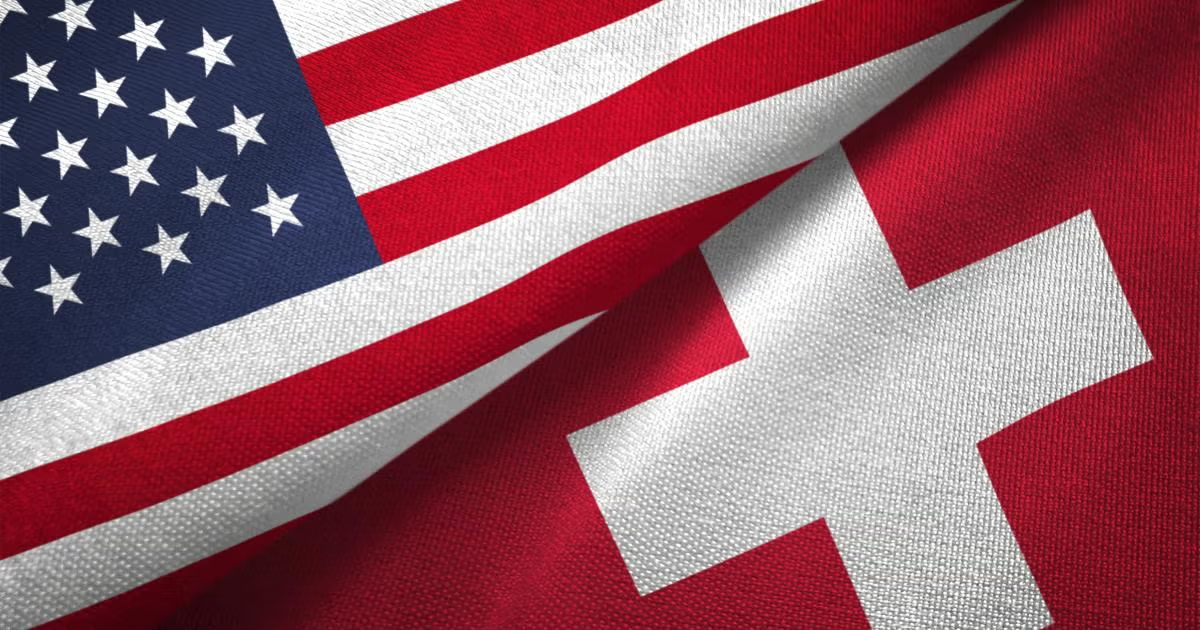
As of 3 June 2026, US President Donald Trump is once again threatening higher tariffs on imports and adding fresh uncertainty to trade planning. Swiss exporters, policymakers and industry groups are watching closely because the new measures could hit key sectors such as pharmaceuticals, machinery and precision instruments, mainly through the American market. The latest warnings come as Washington continues to use tariff pressure as a negotiating tool in its wider trade disputes.
“Following the Supreme Court overturning the IEEPA tariffs, a legal basis was needed to rebuild Trump’s tariff wall, and this was a convenient way to do so,” said Steve Okun, chief executive of APAC Advisors, a geopolitical consulting firm. “Tariffs are here to stay under the Trump administration.”
New US tariff threats are once again putting Switzerland’s export sector under pressure, reviving fears that Swiss goods could face another round of punitive duties in the American market. The latest warnings come as the long-running trade dispute between Washington and key partners continues to shift, leaving Swiss companies exposed to policy changes that can arrive with little warning.
Read More: Iran Crisis Causes Swiss SME Confidence Dip
The US Currently Applies Country-Specific Additional Tariff Of Up To 15% On Some Swiss-Origin Imports, With Some Exceptions
Swiss industry groups have been warning for months that uncertainty alone is already weighing on investment and export planning. Trump-era trade policy continues to burden Swiss exports, companies and investment decisions, and the international trade conflict is one of the main external risks facing the economy. That matters not just for large multinationals but also for small- and mid-sized suppliers that feed into larger Swiss export chains.
The current framework already shows how sharply tariff policy can hit Swiss exporters: according to the State Secretariat for Economic Affairs, the US currently applies a country-specific additional tariff of up to 15% on some Swiss-origin imports, with exceptions for certain goods, including agricultural products, pharmaceuticals, and civil aircraft-related items.
EU And US Negotiators Have Been Working Through Tariff Arrangements Separately
EU and US negotiators have been working through their own tariff arrangements, and the US administration has repeatedly signalled that countries which do not meet its demands on market access and trade balances could face steeper duties.
In that environment, Switzerland has no guarantee that the current ceiling of 15% will hold, especially if Washington decides to tighten pressure again. The pharmaceutical sector is a particular concern. Swiss drugmakers are among the country’s biggest exporters to the US, and any further tariff escalation would be felt quickly across production, pricing and supply-chain decisions.
The current US rules already leave the door open to sector-specific measures, and the fact that Washington continues to review drugs and semiconductors separately means more volatility may lie ahead.