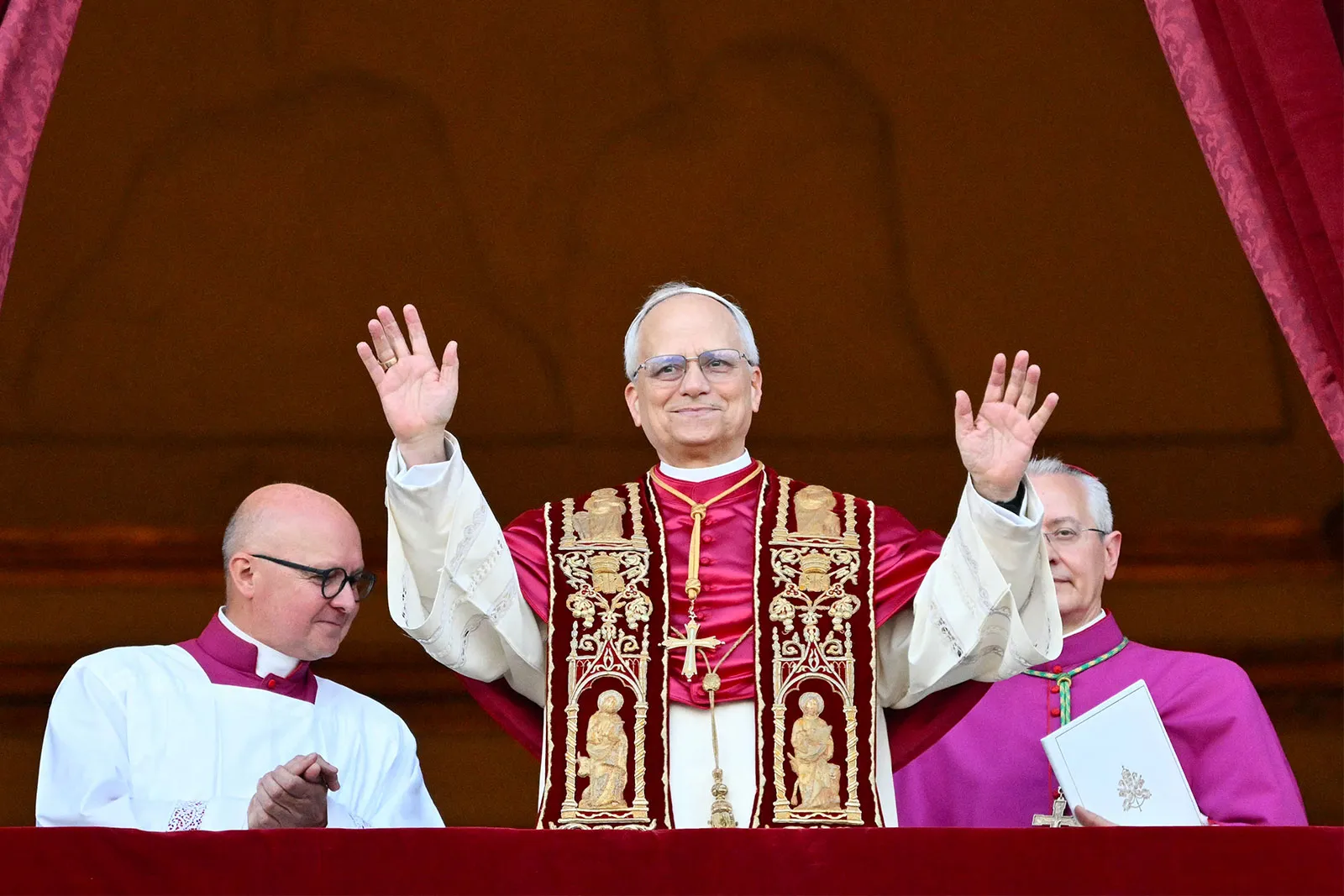
Pope Leo XIV has issued a sweeping condemnation of artificial intelligence (AI). Leo warns that AI is a “threat to human dignity,” pointing out that the technology “needs to be disarmed.” He cautioned against a technological revolution driven by what he called “the idolatry of profit.”
Pope Leo XIV on AI:
“Artificial intelligence needs to be disarmed. The word [disarmed] is strong I know, but deliberately chosen because this moment needs words capable of attracting attention, awakening consciences, and indicating paths forward for humanity.” pic.twitter.com/h5zC2600Kl
— Pop Base (@PopBase) May 25, 2026
The recently released Magnifica Humanitas on safeguarding the human person in the time of Artificial Intelligence said, “No computational system, however sophisticated, can create a heart that gives itself, or a conscience that discerns good from evil.”
Even when machines excel in efficiency, a human face that asks to be gazed upon remains the center of our history.
The statement, contained in a papal encyclical, marks one of the most direct interventions by the Catholic Church on the governance of AI and represents a significant moment in the global debate over how to regulate the technology.
Read More: AI v/s Defense: Is Switzerland’s New Cyber Strategy Actually Working? – Helvetica Times
Pope v/s Silicon Valley: Pope Leo XIV Warns AI Is “Threat to Human Dignity”
The pontiff’s words are pointed at a specific target. The encyclical singles out the concentration of AI power in the hands of a small number of corporations and individuals, a framing that places the Vatican in direct tension with the technology industry and some figures closely aligned with the current US administration. Pope Leo warned that when decisions, including life-and-death ones, become automated or opaque, “the risk of abdicating responsibility increases.”
The development and use of AI in warfare must be subject to the most rigorous ethical constraints, to guarantee respect for human dignity and the sanctity of life and to avoid a race to develop such arms.
Switzerland hosts several of the international bodies, including ITU, the UN’s technology agency, and the AI for Good summit at the Palais des Nations in Geneva, that are at the centre of efforts to forge global AI governance frameworks. The Pope’s moral intervention adds significant weight to those multilateral processes at a time when they are struggling to keep pace with the technology’s development.
AI does not remove the intrinsic inhumanity of conflict; indeed it can only bring about conflict more quickly and render it more impersonal, lowering the threshold for resorting to violence, transforming defense into threat prediction and thus reducing victims to data.
We cannot ignore the fact that the protection of human rights has been exposed to two particularly serious dangers. The first is that these rights are declared in a purely formal sense, while technological progress continues alongside covert or overt violations of human dignity. The second, which is in fact the root of the first, is the inability to recognize the foundation of their universality, since we have abandoned “the search for the solid foundations sustaining our decisions and our laws.”
Encyclical Also Rejected American Reasons For war On Iran Recently
The encyclical also takes direct aim at efforts to justify military force through religious doctrine. US vice-president JD Vance and defence secretary Pete Hegseth had argued that the US strike on Iranian missile sites was consistent with Catholic “just war” theory. The Pope flatly rejected that framing, writing that the doctrine “has all too often been used to justify any kind of war” and declaring it now outdated.
The encyclical also arrives weeks after the Vatican’s own Dicastery for the Doctrine of the Faith issued an earlier note on AI ethics, suggesting a coordinated and escalating effort by the Church to shape the debate. Pope Leo’s willingness to challenge both Silicon Valley and Washington simultaneously is unprecedented in recent papal history and reflects a pontiff who, by his own account, has “no fear” of the Trump administration.