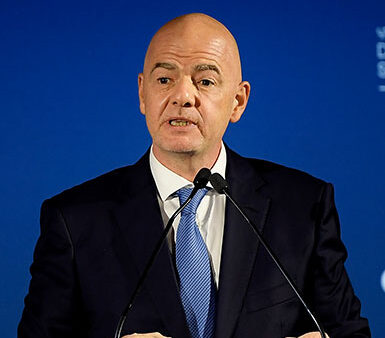
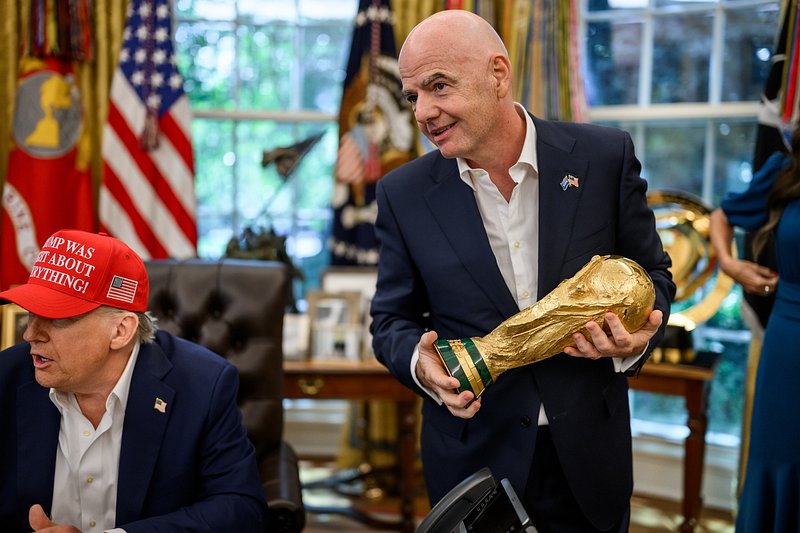
The payment was revealed by The Times through IRS Form 990 filings for FWC2026 US Inc, the US-based entity FIFA set up to manage and operate the 2026 World Cup. The filing lists $1.72 million in compensation for Gianni Infantino in 2024, separate from the CHF 4.274 million FIFA reported in its own annual report.
FIFA’s 2024 annual report listed Infantino’s compensation at CHF 4.274 million, roughly $4.86 million. The additional $1.76 million from FWC2026 was not disclosed in that report.
The $1.76 million figure comes from FWC2026’s IRS Form 990 for the 2024 tax year. Of that total, $626,229 was categorised as “other reportable compensation,” in addition to base salary and bonus.
The question is not whether Infantino received the money. The IRS filing confirms he did. The question is whether FIFA’s public reporting captured the full picture of his compensation.
The Times was the first to report the payment, and its reporting has since been picked up by USA Today, ESPN, Sky Sports, the Sydney Morning Herald and others. It also reported that Infantino may have received similar or higher payments in 2025 and 2026, though those years’ IRS filings are not yet publicly available.
Read More: UBS Faces Potential Reshaping As Switzerland Pushes Rules
FIFA Rejects The Suggestion That It Breached Its Own Statutes
A spokesperson told ESPN that the organisation “fully complies with all reporting requirements” and “strongly rejects any suggestion there has been a violation of FIFA’s statutes.”
FIFA also said it “does not pay a second salary to the FIFA president” and that his annual compensation and contractual benefits are decided by the independent Compensation Sub-Committee.
The distinction FIFA is drawing is between tax reporting to US authorities and public disclosure in its annual report. The payment was declared to the IRS, but it does not appear in the annual report that FIFA uses to publish leadership compensation.
The Transparency Rule At Stake
FIFA’s statutes are explicit. Article 43, paragraph 13 states: “The individual compensation of the FIFA president, the members of the council and the FIFA secretary general shall be made public.”
Miguel Maduro, former chair of FIFA’s governance committee, told The Times that failing to disclose the additional payment constitutes a clear breach of those statutes.
FIFA disputes that interpretation. It argues that the compensation was properly reported to US authorities and that the Compensation Sub-Committee sets the president’s pay.
FIFA has committed to transparency on leadership earnings since 2016. If additional payments from a FIFA-controlled World Cup entity are not reflected in the annual report, that commitment is called into question.
Sportschau notes that the tax documents alone do not prove the payment was a “second salary” separate from Infantino’s FIFA compensation. The base salary and bonus figures in the filing match what FIFA reported, but the additional “other reportable compensation” is not explained in the annual report.
What We Still Don’t Know
FIFA has not explained why the $1.76 million was not included in the 2024 annual report, nor has it said whether similar payments were made in 2025 or 2026.
The Times also reported on Infantino’s living arrangements in Miami, including a rented villa. A spokesperson for the property owner said Infantino paid market rent. Claims about a luxury villa in Qatar or school fees for his children remain unverified.
FIFA’s 37-member Council meets in Zurich on Thursday. Whether it addresses the compensation question, or whether FIFA publishes a clarification of its disclosure practices, will determine whether the issue escalates.