Protective glasses for Wednesday’s partial solar eclipse are becoming difficult to find across Switzerland, with specialist retailers reporting depleted stocks and major supermarket chains saying they do not sell dedicated eclipse glasses. Authorities are warning the public not to replace certified eyewear with ordinary sunglasses or improvised filters.
Demand has surged ahead of the August 12 eclipse, which will be visible across Switzerland during the evening. At online retailer Digitec Galaxus, the two cheaper suitable models had already sold out, while only limited quantities of the most expensive model remained available. The company said the availability of eclipse glasses was “not ideal” and that new stock was not expected until later in August.
A survey by Keystone-SDA found that Migros and Coop, together with their subsidiaries Jumbo, Fust and Interdiscount, were not offering specialist eclipse glasses. Aldi Suisse and DM also said they did not carry the products.
In Bern, the shortage led to long queues outside specialist shops. In Lausanne, hundreds of people reportedly gathered at a store selling the remaining stock, with some customers saying they had been unable to find suitable glasses at pharmacies.
Stocks have also been running low in Zurich. Reports said specialist shops had sold out or had only a small number of pairs left, while some pharmacies did not carry eclipse glasses at all. Availability is changing quickly, however, and customers are being advised to contact opticians, astronomy retailers and observatories directly before travelling.
Safe Alternatives Without Glasses
The BBC has highlighted safe projection methods for people who cannot obtain certified eclipse glasses. These methods allow observers to view an image of the eclipse without looking directly at the Sun.
The simplest method is a pinhole projector. A small hole is made in a piece of card, and the card is held so that sunlight passes through the hole onto a separate sheet of white paper. The observer stands with their back to the Sun and watches the projected image on the paper rather than looking at the Sun itself.
A kitchen colander can produce several small projected images of the eclipsed Sun. By holding it between the Sun and a sheet of paper, viewers can see the changing shapes created by the holes in the colander.
A cardboard-box projector is another option. It uses a small pinhole in foil to project sunlight onto a white surface inside the box. The box blocks surrounding light and allows viewers to see the projected image without looking directly at the Sun.
These are projection techniques, not homemade protective glasses. The observer must never look through the hole, foil or colander directly at the Sun.
Eclipse Will Be Partial in Switzerland
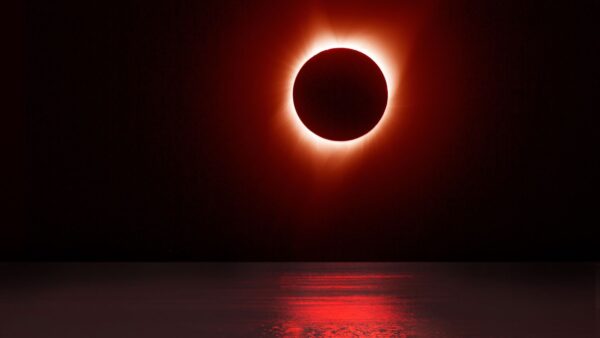
The Moon will pass between the Earth and the Sun on Wednesday, August 12. In Switzerland, the event will be partial, with the Moon covering most — but not all — of the solar disc.
The eclipse will begin at around 7pm and reach its maximum between approximately 8:15pm and 8:20pm, before ending around 9pm. The phenomenon will occur low in the western sky, making elevated locations with a clear view particularly suitable for observation.
The Federal Office of Public Health says that even a partially covered Sun can cause permanent retinal damage if viewed directly without suitable protection. The risk remains because the visible portion of the Sun is still intensely bright.
What Solar Eclipse Glasses Are Safe?
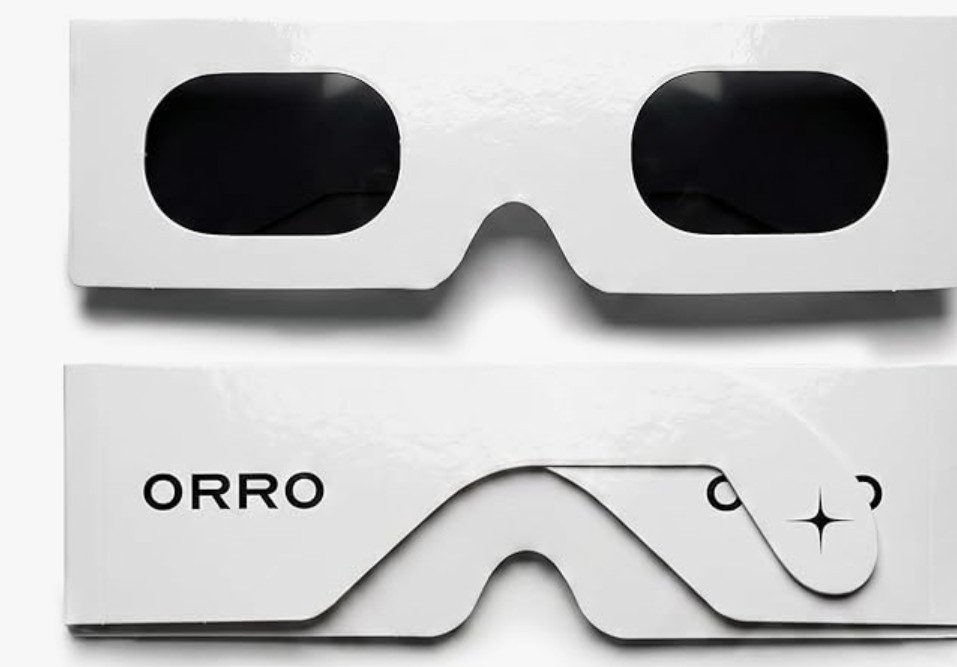
The BAG says eclipse glasses must meet the ISO 12312-2:2015 standard and carry the CE mark. They should not be scratched, torn or otherwise damaged. Users should inspect the glasses before wearing them and ensure they fit securely, particularly when children are watching the eclipse.
Ordinary sunglasses, even very dark ones, are not safe for eclipse viewing. They do not block the Sun’s radiation sufficiently and can create a false sense of protection.bag.admin+1
The same warning applies to coloured films, homemade filters, photographic film, CDs, smoked glass and similar household materials. The Swiss health authorities specifically advise against making homemade eclipse glasses or using coloured lenses as substitutes.
Cameras and Telescopes Also Need Filters
Using a smartphone, camera, binoculars or telescope does not make direct observation safe. The Sun’s rays can be concentrated by optical equipment and cause severe eye injuries.
NASA advises that cameras require a special solar filter when photographing a partial eclipse. A phone camera may also be damaged if pointed directly at the Sun, particularly when used with a magnifying lens or other optical attachment.
Anyone using a telescope or binoculars must install an appropriate solar filter on the front of the device before aiming it at the Sun. Filters placed only at the eyepiece are not considered safe for direct solar viewing.
Observatories May Offer Solutions
People unable to find glasses at retail outlets can check local observatories, planetariums, astronomy clubs and specialist optical shops. Some observatories are organising public viewing events and may provide certified glasses or filtered telescopes.
The Rigi mountain resort, for example, plans to sell a limited number of certified glasses at Rigi Scheidegg on the evening of the eclipse. Visitors are advised to arrive early because supplies are limited.
With demand rising and new deliveries uncertain, Swiss residents who want to watch the eclipse safely should arrange certified protection as soon as possible. If no suitable glasses are available, a pinhole or projection method is safer than attempting to view the Sun directly.
Read More: Pierin Vincenz Case: Defence Seeks Dismissal