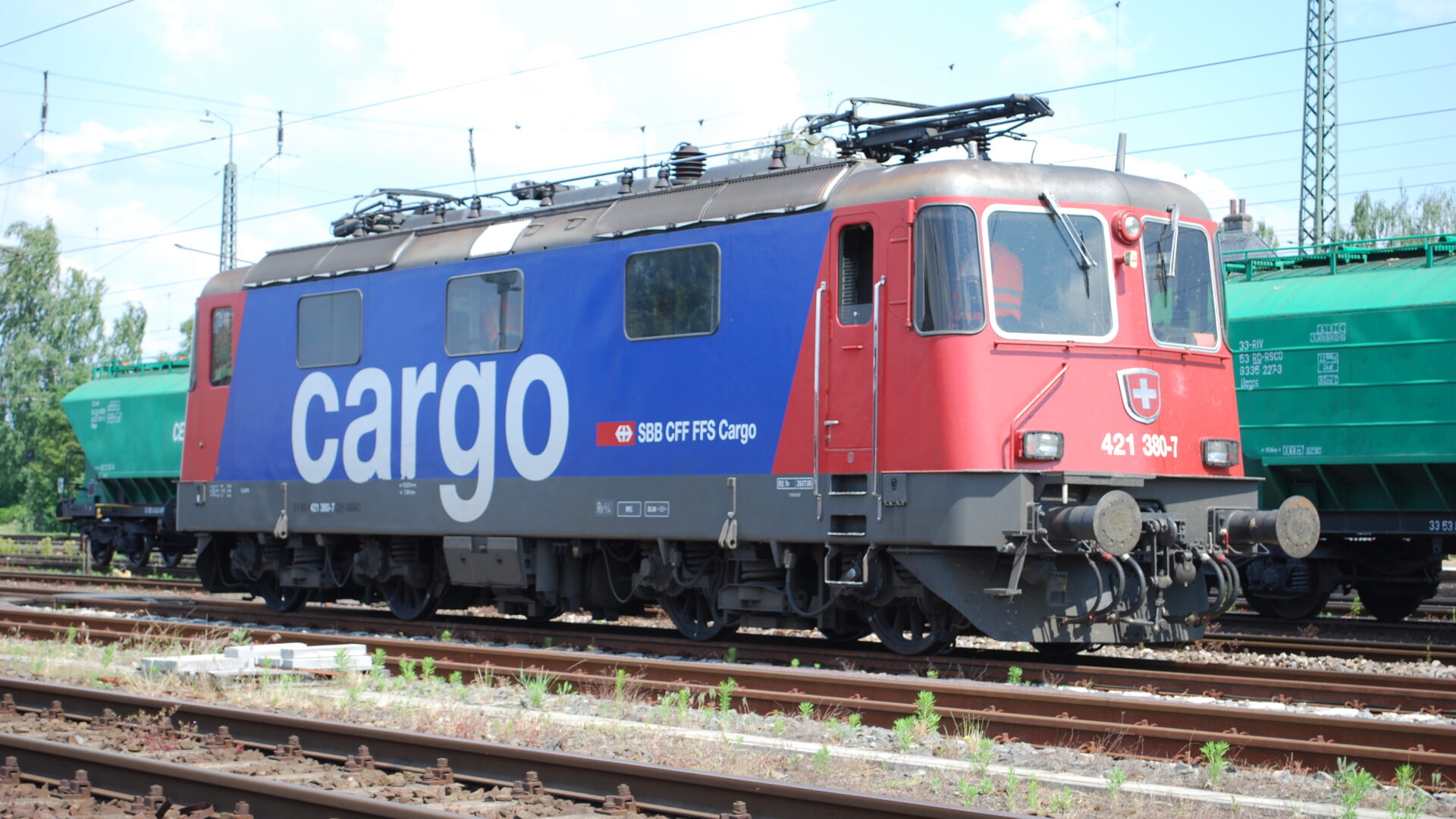
Swiss rail freight operator SBB Cargo is facing criticism from major retailers amid ongoing service disruptions and terminal closures, with some customers threatening to shift freight transport from rail back to road haulage.
The Association of the Loading Economy (Verband der verladenden Wirtschaft), representing major retail chains, has issued sharp criticism of the SBB subsidiary, according to Inside Paradeplatz. The publication reports that frustrated customers are actively seeking alternatives to rail freight, with many shifting cargo back to road transport where possible.
So, what is the rationale behind the restructuring? SBB Cargo reported a CHF 76 million loss for the previous year in its combined freight segment, with the single wagonload traffic (EWLV) alone losing around CHF 80 million annually.
Alexander Muhm, CEO of SBB Cargo, stated that the combined freight model on the affected routes was no longer economically viable. The company aims to minimise job cuts through natural turnover, retirements and internal transfers.
Read More: Why Are Petrol And Diesel Prices Rising Again In Switzerland?
Terminal Closures and Restructuring
Approximately 65 jobs were eliminated by the end of 2025, mainly affecting locomotive crews, shunting staff and technical inspection personnel.
The tensions follow SBB Cargo’s announcement that it would close eight of its ten combined freight terminals across Switzerland by the end of 2025, citing unsustainable losses in the domestic freight business.
The closures affect terminals in Basel, Lugano, Gossau and Widnau (SG), Oensingen (SO), Renens and St. Triphon (VD), Cadenazzo (TI)
As part of its restructuring, SBB Cargo has launched a new shuttle service between Dietikon (near Zurich) and Stabio (Ticino) in 2026, operating as a pilot project for the north-south corridor.
The service will run twice daily in each direction, transporting semi-trailers on low-emission electric trains, completing the 170-kilometre journey in around 2.5 hours.
Impact on Freight Volumes
The terminal closures are expected to result in an average of 70 additional truck journeys per day, approximately 25,000 extra truck trips annually.
One industry estimate suggests that up to 15 percent of SBB Cargo’s total freight volume could shift from rail to road as a result of the restructuring.
Migros v/s SBB
Migros Ostschweiz shifted its frozen goods transport back to road haulage in early 2025 after the Gossau and Widnau terminals were closed.
When Migros announced in 2014 that it would shift frozen goods imports from road to rail, the company claimed it would save 300,000 truck kilometres annually. The reversal of that decision in 2025 highlighted the tension between cost pressures and sustainability goals.
Negotiations between SBB Cargo and Migros on a long-term freight contract are ongoing, with SBB describing the discussions as “partnership-oriented”.
SBB Cargo states that the restructuring aims to secure “green supply chains” while improving efficiency and reducing costs by 2030.