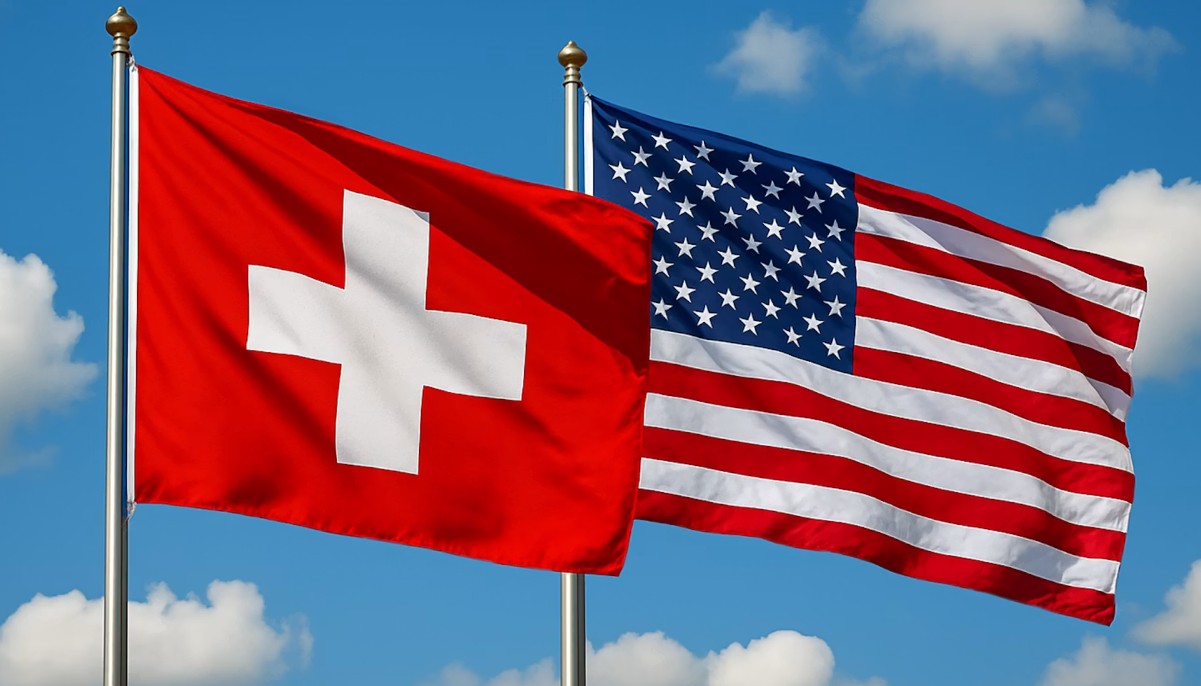
Switzerland’s trade relationship with the US has entered a different phase after Washington introduced new tariffs on 24 July 2026, this time tied to a forced-labour investigation rather than the broader trade-deficit dispute that dominated talks last year. The move adds another layer to a relationship that has already seen tariffs swing sharply over the past year.
The US introduced the additional tariffs following an investigation under Section 301 of the Trade Act of 1974 into trade in goods produced using forced labour. Under the new system, a variable additional tariff of up to 12.5% will be levied on Swiss imports, offset by the existing most-favoured-nation (MFN) duty rate.
Numerous product categories are exempt from the additional tariffs.
In practice, if a product’s MFN duty is 5%, the new additional tariff adds 7.5% on top, but if the MFN duty is already 12.5% or higher, only the MFN duty applies. Numerous product categories are exempt from the additional tariffs altogether, and the new Section 301 measure replaces the additional tariffs that had been in force since February 2026 under Section 122 of the Trade Act, which had added a flat 10% on top of MFN duties. Existing sector-specific tariffs remain unaffected by this change.
Read More: Is MeteoSwiss Becoming Less Reliable?
New Tariffs: Pharma Tariffs Loom Next?
Adding to the shifting picture, the US is set to impose new additional tariffs under Section 232 on pharmaceutical products starting 31 July 2026. Officials clarified that these pharma-specific tariffs will not stack with the Section 301 tariffs, meaning companies won’t face both simultaneously on the same goods.
Pharmaceuticals are a particularly sensitive category given that chemical and pharmaceutical exports account for more than half of Switzerland’s total exports to the US. Any additional friction in this sector could have an outsized impact on the broader Swiss economy.
This latest tariff move builds on a turbulent 12 months in Swiss-US trade relations. Washington had imposed a 39% tariff on Swiss goods in August 2025, among the highest rates applied to any developed economy, before a November 2025 agreement brought that rate down to 15%.
That deal also saw Switzerland commit to major concessions, including duty-free tariff quotas for US beef, bison and poultry, and pledges from Swiss companies to invest USD 200 billion in the US economy by 2028. Despite the tariff turmoil, Swiss exports to the US actually rose 3.9% in 2025, even outpacing overall Swiss export growth, according to federal customs data.
The US remains Switzerland’s most important export market and its second-largest trading partner overall, making any tariff shift consequential for the Swiss economy. With sector-specific tariffs on pharmaceuticals arriving just days after the new forced-labour-related tariffs, Swiss exporters now face a more complex and layered tariff landscape than at any point in the past year.