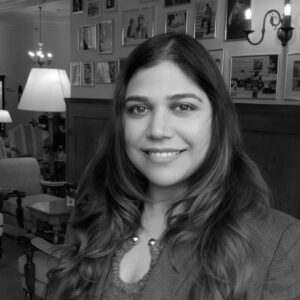
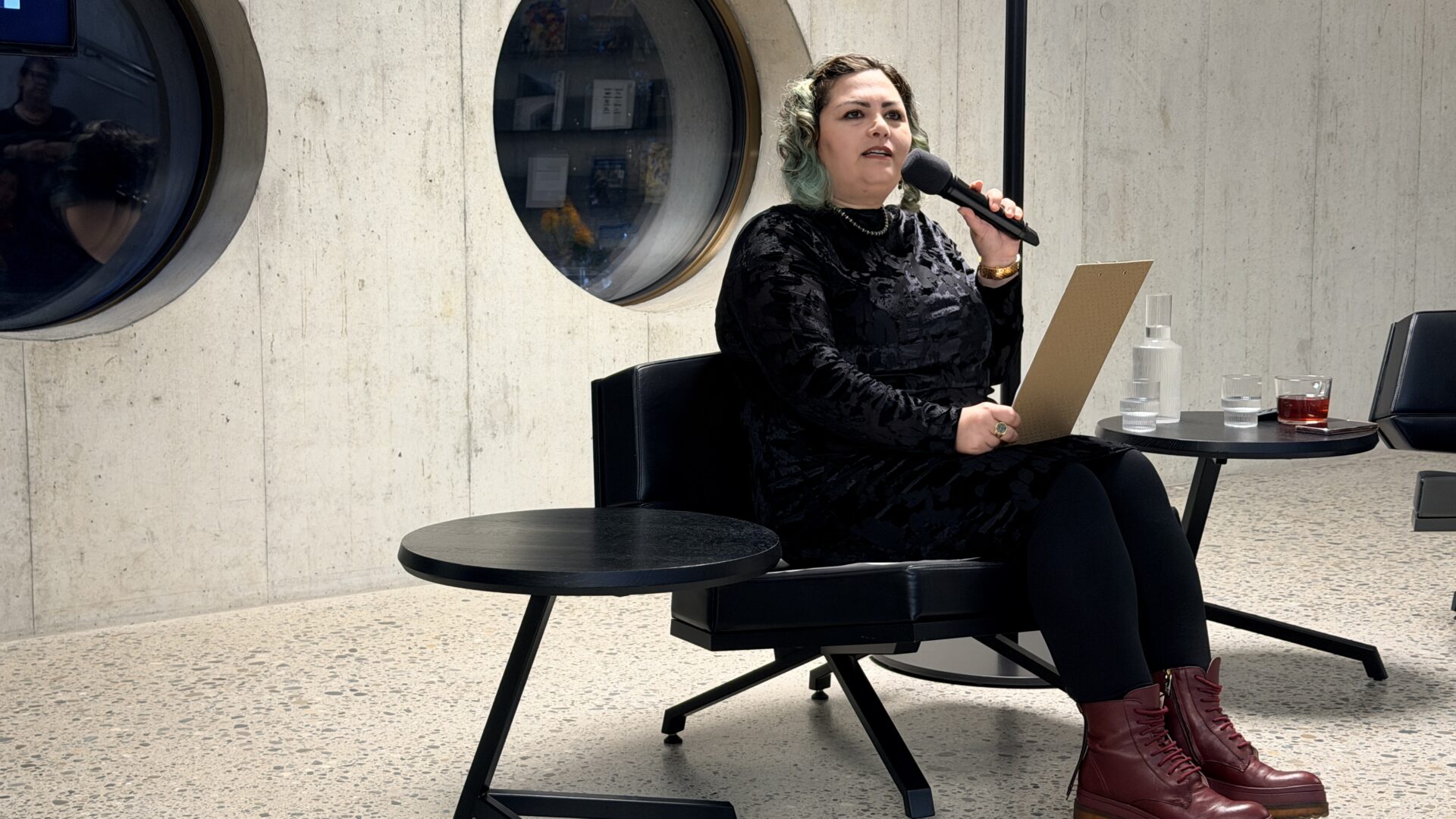
Zürich’s largest literary festival, Zürich liest, brought to the centre a pressing story of Sahar Tavakoli, an Iranian poet and translator. Tavakoli, along with her husband, owned a publishing company called Dastan Publishing House in Iran.
After being threatened with “erasure” by Iran’s Islamic Revolutionary Guard Corps, she escaped to Switzerland and sought asylum. Her story is relevant today more than ever.
“In Iran, being a woman is the first crime you have already committed in a theocratic regime,” said Tavakoli.
“And then you start being brave and stubborn just to take your normal rights. Then you deal with the amount of pain and unfairness. You start noticing boundaries, and then you learn how to deal with these boundaries. And then in one collective point, while your gender, your body, and your mind, and your whole femininity come to an intersection with dictatorship, you become the bravest woman in the world,” said Tavakoli during Zürich liest on 22 October 2026.
“Every woman in Iran who wants to go beyond what is dictated is political, even at home. And you become a hero of a nation.”
Iran’s January 2026 Crackdown
Iran’s January 2026 crackdown on nationwide anti-government protests killed not only demonstrators but also bystanders, according to witness and family accounts reported by Reuters. The US-based rights group HRANA said it had verified 4,519 unrest-linked deaths, including 38 bystanders, with 9,049 further deaths under review, while an Iranian official put the confirmed toll above 5,000. Amnesty International said evidence pointed to a coordinated escalation in unlawful lethal force by security forces, while Iranian authorities blamed “terrorists and rioters” backed by foreign adversaries.
“The pain circulated and injustice circulated among all the Iranian women and it got louder and louder and it lead to a huge movement which is resonating till now d and nobody can forget January 2026 where more than 30,000 souls were killed in the streets of Iran.”
“And they were not killed by USA, they were not killed by Israel, and they were not killed by bombs. They were killed by the regime itself, and by military weapons.”
“How can we explain this? And how the world can see this? Observe this and still shake hands with all these regimes, authorities, and representatives around the world? And that’s an unanswered question for me.”
On being asked why she chooses to raise her voice, Tavakoli said, “Rape is used as a threat for all the women who are taken to custody, even men. I cannot neglect that. And I cannot erase that from my writings. It should have a place. And this regime, I mean, during January 2026, they were not giving back the bodies of the women. And when the bodies of the women were back to the families, they didn’t have a womb. And this is not documented. This is not officially documented anywhere.”
“The number of the executions is not officially documented and it’s really sad and it’s really painful. I would say they really want to erase us.”
Zürich Liest: A Woman’s Encounter With IRGC
“When I was called by the IRGC, I was told that I will be erased from the board. So all my books and activities, my business as a publisher, my work as a translator and poet, everything would be erased. And that I cannot forget their brutal tone in the interrogation room. And they were just repeating that. We will erase you.”
“I was always trying not to encounter the regime face to face and not to make this encounter cost my life and my activities. But unfortunately it happened. In the interrogation room, I was thinking that I have a voice and I was sure that I’m able to react and to talk about all these things. So I was sitting in the interrogation room and planning my escape to somewhere.”
“From the moment I arrived in Switzerland, after one year of silence and recovery, I decided now it’s time to start. I started reading, I started interviews and sharing. I thought that by this, I’m contributing to what I already missed in my country and what was taken from me.”
“Exile is a complicated situation in general. There is less space for your mother tongue, and you need to learn a new language, and then there are limitations after limitations that you encounter.”
On Censorship In Iran
“Censorship in Iran is a mechanism of control through systems and platforms. But it’s not only in Iran. It’s happening in different places in the world, and we are not alone in Iran. But we are trying, as publishers, as writers, translators, to find a way to resist against this censorship.”
” I would say that this regime had a long hand in censorship and as a woman publisher and activist, I know all the boundaries and I know how to deal with all this stuff. And the first boundary that you have is your own body. I mean, it’s not the thing which is like owned by you, as a woman, and the voice of a woman, the heart of a woman.”
READ MORE: UBS Shifts Technology Jobs To India And Poland As Swiss Layoffs Begin