
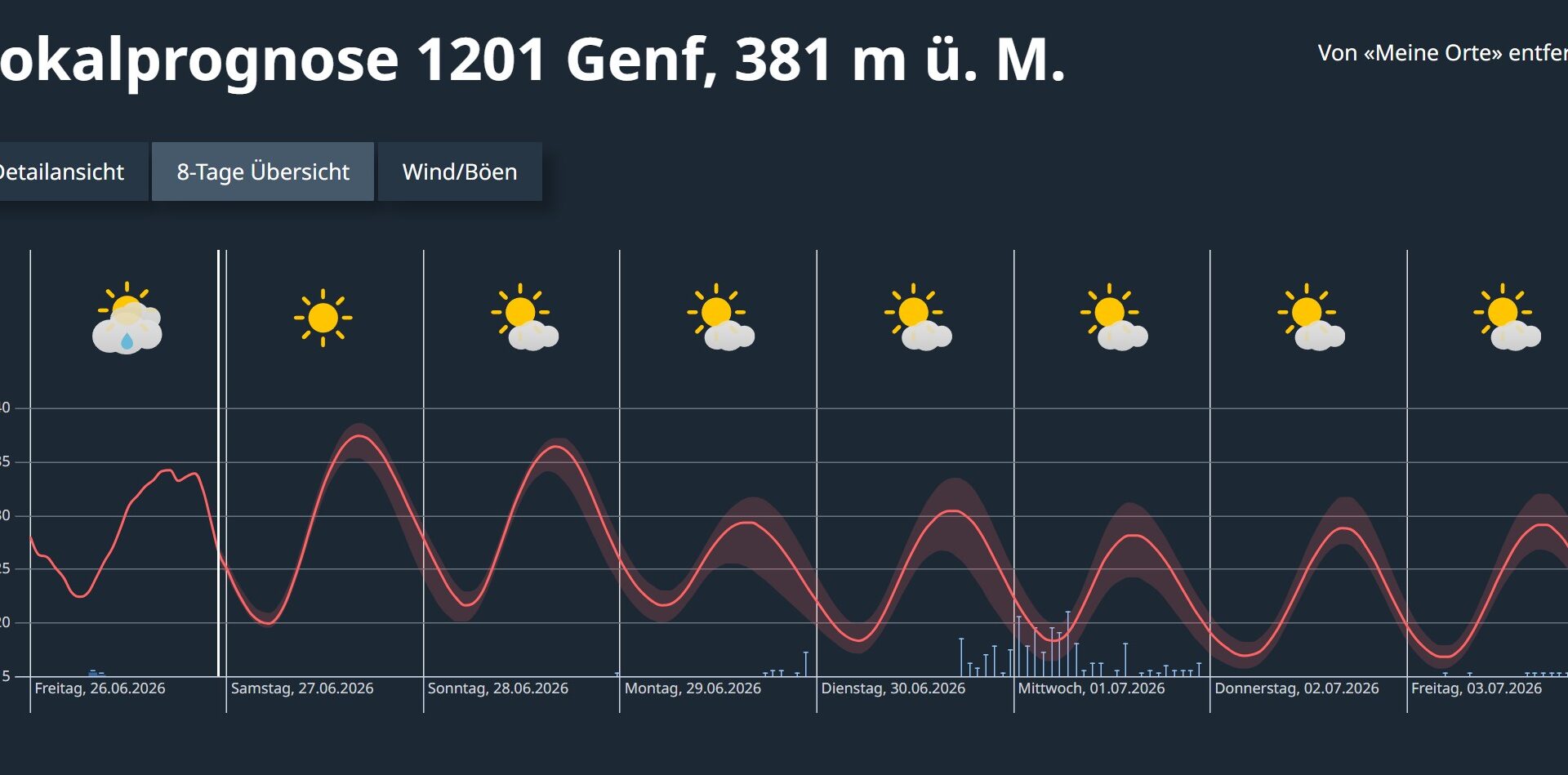
Geneva has long been considered the most restrictive canton in Switzerland when it comes to installing air conditioning in private homes. Geneva is now considering loosening the rules that have, for years, forced residents to produce medical certificates just to cool their own living spaces.
Under current cantonal law, any fixed air-conditioning unit requires an administrative permit, and homeowners must demonstrate a need, which, in practice, often requires a doctor’s note attesting to a medical condition that necessitates cooler indoor temperatures.
Simply being uncomfortable in summer heat has never been considered sufficient justification.
Push For Reform Has Been Building For Several Years
In 2023, SVP deputy Michael Andersen tabled a bill proposing to scrap the articles of Geneva’s Energy Act that subject the installation, modification, or renewal of comfort air-conditioning systems to cantonal authorisation. More recently, PLR deputy Adrien Genecand has backed a separate legislative proposal focused specifically on simplifying the approval process for smaller cooling units, stopping short of full deregulation but aiming to eliminate the bureaucratic burden for modest domestic installations.
The Grand Council is expected to vote on a possible legislative amendment, with the debate ongoing in committee.
Read More: Zürich Airport Scraps Liquid Limit For Departing Passengers
The Unintended Consequence
Ironically, Geneva’s strict rules appear to have produced the opposite of their intended environmental effect. Because fixed, energy-efficient systems have been so difficult to obtain legally, sales of portable, single-unit mobile air conditioners, which are freely sold without any permit requirement, have surged during heatwaves. These units are significantly less energy-efficient than fixed reversible heat pumps, as they typically require a window to be left open to expel excess heat. Even the head of Geneva’s cantonal energy office, Cédric Petitjean, has acknowledged the paradox, saying that with the evolution of the climate, the canton will need to “rethink and redefine summer comfort.”
Swiss Heatwave: What the Rules Currently Allow
Under the existing framework, comfort air-conditioning can be approved — without requiring proof of medical need — in specific circumstances: where at least 80% of the heat rejected is recovered and valorised, where the installation is subject to an annual energy monitoring plan, and where cooling water is properly managed. Reversible heat pumps, which can provide both heating in winter and moderate cooling in summer, have also seen gradually relaxed rules in recent years, as they are considered more energy-efficient.
Cantons such as Aargau, Thurgau, and St. Gallen take a more pragmatic approach to air-conditioning permits, though noise limits and general building regulations apply broadly across the country. As climate pressures mount and Swiss summers become reliably hotter, the political pressure on Geneva to align more closely with its neighbours, while maintaining energy efficiency standards, is likely to grow regardless of the outcome of the current parliamentary process.