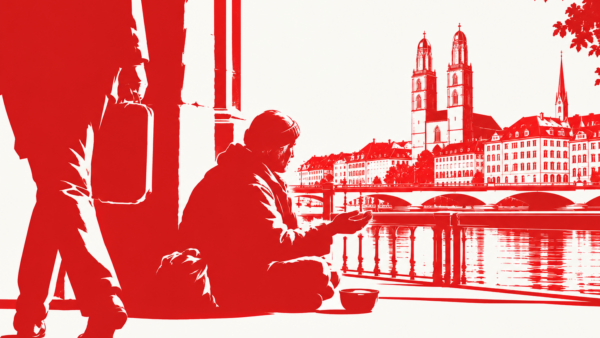

PwC is planning to cut bonuses for some employees in Switzerland by roughly 50%, as the Big Four accounting and consulting giant responds to a challenging economic environment and the rapidly growing use of artificial intelligence in professional services work, according to Bloomberg.
The bonus reductions were announced internally over the past several weeks during a series of town-hall meetings held with specific teams, rather than through any written company-wide notice. The people who described the plans to Bloomberg asked not to be identified, citing the sensitivity of discussing internal business matters.
A PwC spokesperson said the firm does not comment on internal or personnel matters and would not confirm or deny reports concerning bonuses or other decisions.
According to the people familiar with the matter, PwC Switzerland attributed the bonus cuts to two factors: a difficult economic climate and the increasing use of AI in day-to-day work.
The move reflects a broader pattern across the global consulting industry, which is grappling simultaneously with softening demand for some professional services, pressure to improve profitability, and the rapid spread of AI tools capable of automating tasks that once required large teams of junior consultants.
PwC Switzerland To Halve Bonuses: But No Layoffs — For Now
Notably, when employees in Switzerland asked whether job cuts were also being planned alongside the bonus reductions, the company said layoffs are not currently under consideration.
PwC’s Swiss bonus cuts follow similar cost-cutting moves across the Big Four and major consultancies over the past year. KPMG is cutting around 200 consulting roles in the UK, citing low natural staff attrition and shifting “market dynamics.” Over the past twelve months, McKinsey & Company, Ernst & Young’s US arm, and PwC’s US business have all reduced back-office and administrative staffing levels, leaning more heavily on AI and outsourcing to cut costs and improve profitability.
Deloitte has also seen a string of reports of layoffs and bonus reductions in Switzerland, describing the domestic consulting industry as experiencing an “annus horribilis” — a uniquely difficult year — and framing it as one of the first sectors to feel the disruptive impact of the AI wave.
Why Consulting Is Especially Exposed?
Clients, from multinational corporations to small and medium-sized businesses, are increasingly unwilling to pay the traditionally high rates charged by Big Four firms for work that generative AI tools like ChatGPT can now handle directly.
The commentary suggests that roughly half of typical consulting teams have historically consisted of staff performing repetitive spreadsheet and presentation-based work — tasks now most exposed to AI automation — and that these roles are among the first to bear the cost of the industry’s adjustment. Audit and tax services, by contrast, are described as continuing largely unaffected for now.
What Remains Unconfirmed?
-
The precise scope of which teams or seniority levels are affected by the bonus cuts.
-
The exact percentage reduction beyond the general “around 50%” figure reported.
-
Whether the current no-layoffs stance will hold if economic conditions or AI-driven efficiency gains continue to reduce demand for traditional consulting work.
PwC’s own public position remains that it does not comment on internal personnel matters, meaning all specifics about the bonus program continue to rest on anonymous sourcing rather than official confirmation.
Read More: AI Could Cut Swiss Office Demand By 7.9%, Raiffeisen Says