
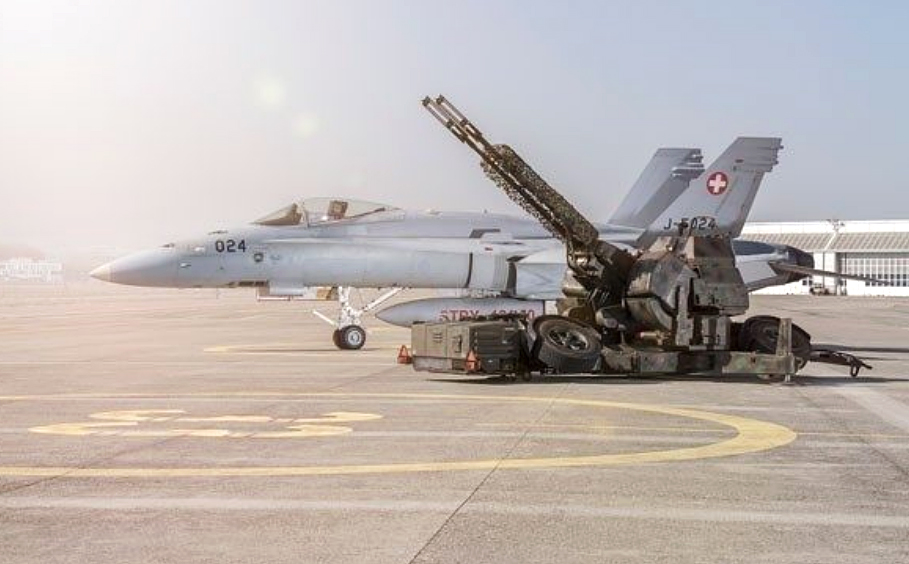
Switzerland is expanding its international cooperation in defence procurement by joining the Ammunition Support Partnership (ASP) of the NATO Support and Procurement Agency (NSPA), the Federal Department of Defence, Civil Protection and Sport (DDPS) announced on Friday, 17 July 2026.
“Switzerland has now also joined the ASP. This encompasses a diverse portfolio of over 2,000 ammunition types in the land, air and water areas,” said the Swiss Gov.
NSPA’s Ammunition Support Partnership is supposed to bring together participating countries to jointly procure ammunition, leveraging economies of scale to reduce costs, monitor stock levels and availability across members, improving supply security and coordinate environmentally sound disposal of obsolete or surplus ammunition.
By pooling demand, the partnership aims to shorten delivery times and make procurement more efficient for all participants.
Read More: Why Are Petrol And Diesel Prices Rising Again In Switzerland?
Switzerland Joined NATO Ammunition: NSPA Ties Since 1996
Switzerland has cooperated with the NSPA since 1996 and already takes part in several of its support partnerships, including those covering air-to-air missiles, air defence missiles.
The latest step into the ammunition partnership deepens this long-standing relationship without changing Switzerland’s status as a non-NATO member.
The move comes as European states work to rebuild ammunition stocks strained by years of underinvestment and increased demand linked to the war in Ukraine. By joining the ASP, Switzerland apparently gains better access to international ammunition supplies in a tight market, more predictable pricing and delivery schedules, a structured framework for joint planning on ammunition needs and disposal.
The DDPS said the arrangement supports Switzerland’s own efforts to strengthen ammunition availability for its armed forces while maintaining its policy of military neutrality and non-membership in NATO.
The announcement stressed that participation in the NSPA partnerships is a procurement and logistics cooperation, not a military alliance step. Switzerland remains outside NATO and continues to determine its own defence and foreign policy independently.
The decision fits within a broader pattern of increased Swiss engagement with European defence logistics and industrial projects, including parallel moves to bolster air defence capabilities and domestic ammunition production capacity