Switzerland is entering a more complicated phase of corporate taxation. In its new research report released on 19 May 2026 KPMG warns that the global minimum tax is now colliding with a new US “side-by-side” approach and forcing Swiss cantons to rethink how they stay competitive.
The consultancy says the country must balance collecting more tax at home with remaining attractive to multinationals, especially in research-intensive sectors.
The timing matters because the first supplementary tax returns for the 2024 tax year are due by 30 June 2026. This means the first real picture of how much revenue Pillar 2 is generating in Switzerland is only now beginning to emerge.
KPMG says that will be the moment when it becomes clear how much money the cantons can use for location-promoting measures such as innovation incentives and R&D support.
Switzerland competes for investment with countries like the United States that have not yet implemented the OECD’s framework and instead apply a different set of tax rules. The special status conferred on the United States puts greater pressure on Switzerland as a location.
At the centre of the debate is the OECD’s global minimum tax, known as Pillar 2, which Switzerland has already implemented through its domestic top-up tax and income inclusion rules. But the landscape is shifting again because the US has rejected the OECD approach and negotiated a separate framework, creating what KPMG describes as a more fragmented and asymmetric system.
Read More: Why Swiss Rents are Rising Faster Again: Raiffeisen Q2 2026 Report – Helvetica Times
American Groups Are Partly Shielded From OECD’s Top-up-tax Logic
That matters for Swiss business because not all major economies are following the same rules. KPMG says the US side-by-side arrangement means American groups are partly shielded from the OECD’s top-up-tax logic, while Swiss authorities still need to protect domestic tax revenues and maintain competitiveness. For companies with operations in the US and Switzerland, that could affect decisions on investment, location and how intellectual property is structured.
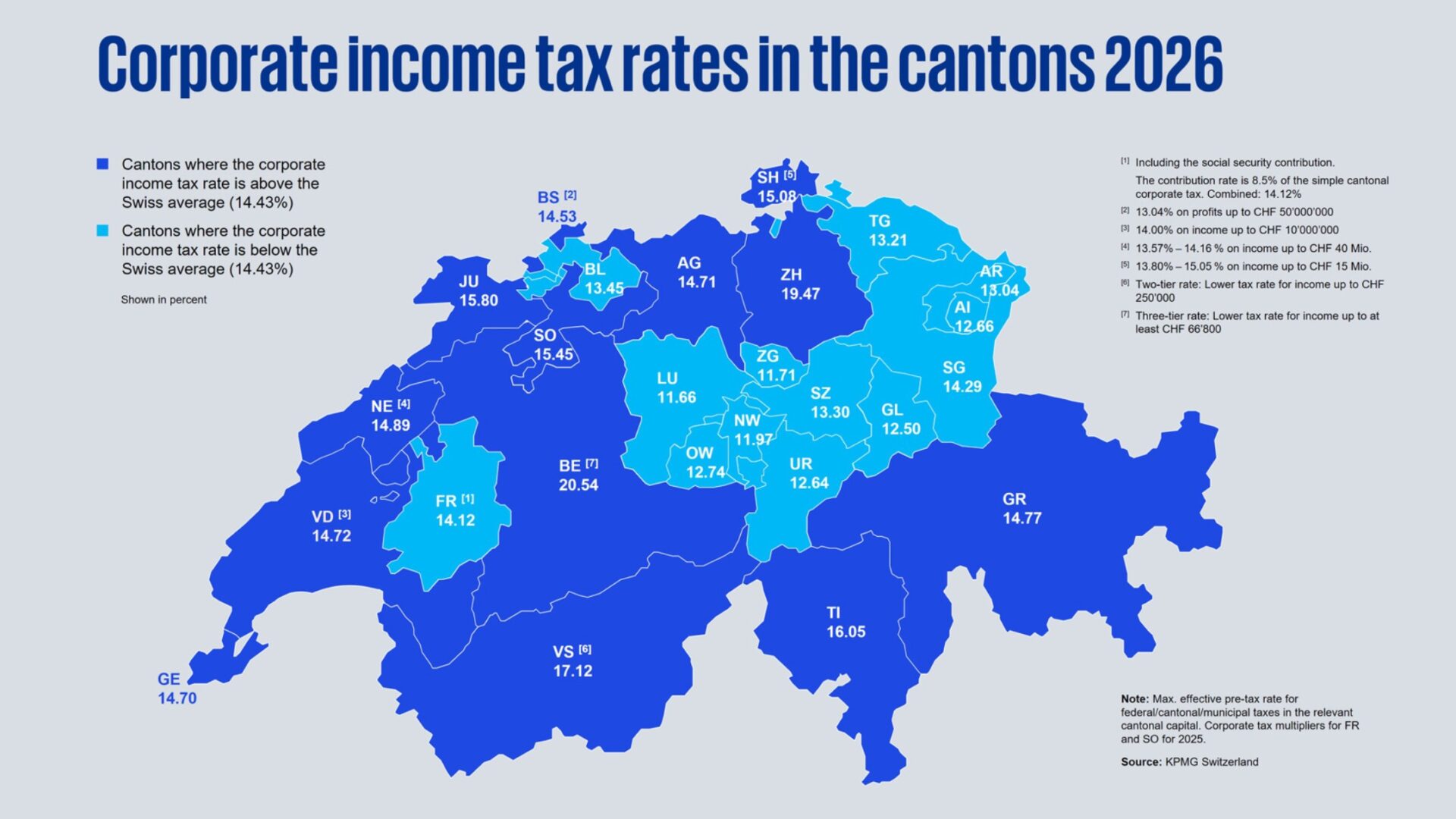
The report also highlights a quiet change happening inside Switzerland itself. Several cantons, including Zug, Basel-Stadt, Lucerne, Graubünden and Schaffhausen, are adjusting tax rates or rolling out incentives to offset the impact of the new rules.
“Due to developments in the international corporate tax landscape, we’ve been observing a creeping erosion of Switzerland’s tax advantage over the past few years. Since the level of corporate tax rates is becoming less important, countries are increasingly turning to alternatives like tax credits and subsidies,” says Stefan Kuhn, Head of Tax and Legal at KPMG Switzerland.
KPMG says those moves are especially aimed at research and development, innovation and employment, areas where tax relief can still be designed to fit within the new international framework.
KPMG also notes that Switzerland has now switched on both the domestic top-up tax and the international inclusion rule, while postponing the under-taxed profits rule for now.
That keeps the country aligned with the OECD framework, but it also raises political questions about whether Swiss businesses are being asked to play by stricter rules than competitors in larger economies.
How Will This Impact You?
The practical consequence is that Switzerland’s reputation as a low-tax location is no longer just about headline rates. The new game is about “qualified” tax incentives, or QTIs, which KPMG says may be treated more favourably under Pillar 2 if they are linked to real economic substance such as R&D spending. That means the most effective tax policy may be less about broad cuts and more about targeted support for actual activity.
The broader consequence is strategic. If Switzerland uses the new revenue to finance attractive incentives, it could preserve its edge as a base for pharma, tech and advanced manufacturing. If it does not, KPMG warns that companies could move functions abroad or rethink their structure altogether. That makes the debate about tax not just a fiscal issue, but a test of Switzerland’s long-term business model.
Read More: Swiss 10-Million Population Vote: High Stakes and E-Voting Trials – Helvetica Times
What is Pillar 2?
Pillar 2 is the OECD-led global minimum tax for large multinational companies. It sets a 15% minimum effective tax rate in each country where they operate, so profits can be topped up if they are taxed too lightly.