

Rent increases in Switzerland are likely to pick up again after a period of temporary calm, as demand remains high and new housing construction stays stuck at a low level.
Raiffeisen Bank says in its latest property study that the recent easing in the rental market is temporary, with the effect of lower interest rates fading and construction costs set to rise again.
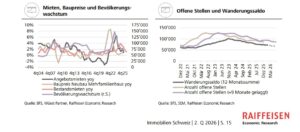
Raiffeisen’s Q2 2026 analysis says the price dynamic in the rental market has cooled since early 2024, driven by slowing immigration, falling interest rates, and construction prices that have stopped rising as quickly. But that breathing space is unlikely to last because Switzerland still has very low vacancy rates and strong underlying demand.
“Historically, such a low vacancy rate has been accompanied by significantly higher rent increases than are currently being observed,” explains Fredy Hasenmaile, Chief Economist of Raiffeisen Switzerland.
“The very low supply ratios and the increasing number of search subscriptions continue to indicate a strong excess of demand in the rental housing market.”
Supply is the Real Bottleneck?
Even with clear signs of scarcity, residential construction remains at a historically low level, which Raiffeisen says points to a structurally limited market response.
The Raiffeisen study holds the following factors accountable for making new building more complex, slower and more expensive: energy efficiency and climate rules to noise protection, accessibility and heritage constraints.
Raiffeisen says that complexity is visible in the length of cantonal building laws, which it says has risen by 26% on average since 2005, while building ordinances have grown by 32%. It also points to a rise in the number of distinct regulated topics in cantonal legal texts, up by roughly 10% to 15% on average. In other words, the bank argues that the housing shortage is no longer just a market problem but also a regulatory one.
That is consistent with the federal government’s own assessment of the housing market. In a 2025 report, the Federal Council said Switzerland has been moving toward a housing shortage since 2020 and that rents have been rising continuously, affecting major cities and increasingly alpine tourist destinations too. The official diagnosis underscores that the problem is long-running, not just cyclical.
Raiffeisen also says the recent abolition of the imputed rental value is not yet producing a renovation boom. The bank sees no clear sign so far that homeowners are rushing to renovate ahead of the tax change, though it expects more activity later as the 2029 implementation date gets closer. That matters because a wave of renovations could tighten the construction sector further and make it even harder to expand housing supply.
Read More: 130-Year-Old Zug Company Collapses: 80 Jobless as Renovation Sector Stressed – Helvetica Times
How Will This Impact You?
For renters, the practical consequence is that the current pause in rent growth may not last long. Raiffeisen says the dampening effect from the lower reference interest rate will soon wear off, while higher energy prices linked to the Iran war could push construction costs up again. The result, it warns, is likely to be renewed pressure on asking rents, especially in tight urban markets.
The Swiss National Bank (SNB) is less concerned about inflation. It expresses greater concern about exchange rate developments and reiterates its increased readiness to counter a rapid and excessive appreciation of the Swiss franc with foreign exchange market interventions. The SNB does not currently consider the franc to be excessively overvalued.
Expats, movers and long-term residents all need to know that even if rent pressures ease briefly, the structural shortage has not gone away.
Switzerland’s housing problem remains a supply problem first, and any relief in asking rents may prove temporary rather than durable.