
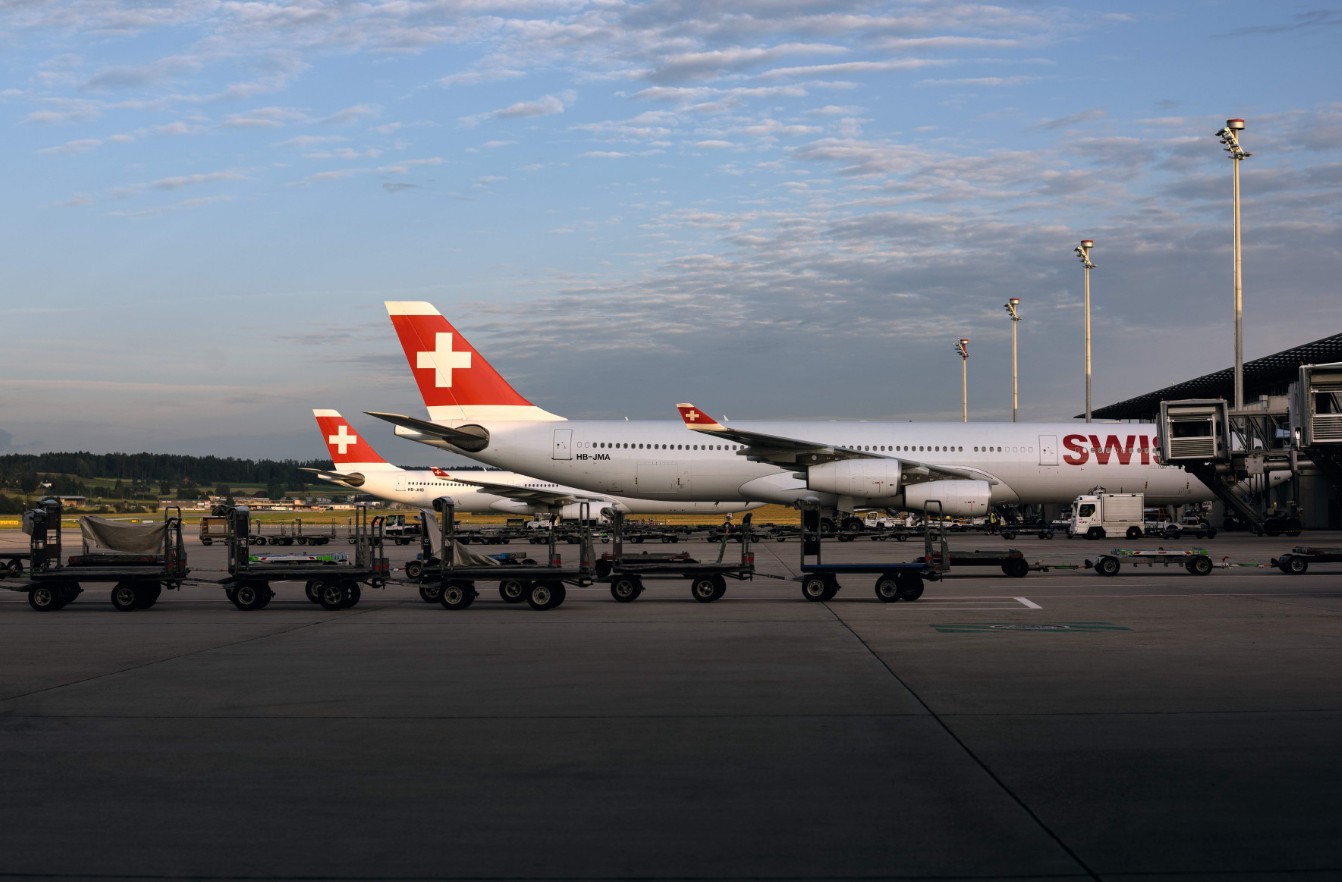
Swiss International Air Lines (SWISS) reported an adjusted operating profit of CHF 30 million for the first quarter of 2026, up from CHF 3.3 million in the same period a year earlier, an improvement of more than 800%. The result, published on 6 May 2026 via the airline’s official newsroom, was driven primarily by a surge in demand on European-Asian routes as the Middle East conflict rerouted global air traffic through hubs such as Zurich.
CFO Dennis Weber pointed to March as the decisive month.
“If we had had to pay for our jet fuel back in March at the prices that we saw in April and expect for the months ahead, our first-quarter results would have told a very different story. The price of kerosene is currently almost twice as high as it was before the Iran War began.”
Revenue held steady at CHF 1.22 billion despite a 7.1% reduction in flights operated, falling to roughly 29,600 departures. Passengers carried dipped marginally to 3.7 million, but the seat load factor rose by 3.4% points, reflecting stronger yields per seat rather than raw volume growth. Sold seat kilometres increased by 0.8 per cent even as available capacity shrank, a sign that SWISS filled a higher proportion of the seats it offered.
Geopolitics Reshapes the Route Map
We report a strong start to 2026. First-quarter operating result reached CHF 30.0 million (Q1 2025: CHF 3.3 million), with revenues holding steady at CHF 1.22 billion despite reduced seat capacity. Read more here: https://t.co/C3eBXI1C44 pic.twitter.com/vLjtqN3LXU
— Swiss Intl Air Lines (@FlySWISS) May 6, 2026
The standout driver of Q1 performance was a pronounced shift in global traffic flows triggered by the conflict in the Middle East. Airlines operating through affected airspace were forced to reroute, funnelling premium long-haul passengers toward European hub carriers. SWISS, positioned at Zurich’s well-connected intercontinental gateway, was a direct beneficiary.
Demand on Asian routes surged as travellers and corporates sought reliable connections through neutral European hubs. Higher revenue per ticket followed. “The conflict in the Middle East led to a noticeable shift in global traffic flows,” Weber noted, with the effect concentrated in the final weeks of the quarter.
Eurocontrol data supports the broader trend: intra-European traffic rose approximately 5 percent in Q1 2026, while Asia-linked routes through major hubs climbed around 12 percent. SWISS’s Zurich base, handling a significant share of Swiss tourism arrivals, including a reported 15% rise in Indian and Chinese visitors, amplified the effect.
Capacity Constraints Cloud the Picture
The profit figure carries an important asterisk. SWISS operated fewer flights not by strategic choice but because of persistent engine shortages, cockpit crew deficits, and broader aviation supply-chain bottlenecks that have affected carriers across Europe. Ryanair and easyJet have reported similar capacity pressures stemming from delayed engine maintenance and overhauls.
Fuel costs added further complexity. Kerosene prices temporarily doubled during the quarter, but SWISS’s hedging programme absorbed much of the immediate impact, limiting the damage to Q1 results. That buffer will not last. Management was explicit: “The second quarter is expected to be significantly impacted by drastically increased fuel prices.” Analysts and industry observers have echoed the caution, framing the Q1 result partly as a one-off boosted by the March demand spike rather than a durable structural shift.
The airline also flagged the difficulty of forward planning in a volatile booking environment. A higher proportion of last-minute reservations — a pattern that emerged post-pandemic and has persisted — makes revenue forecasting harder and increases operational risk.
Cautious Optimism for Summer
Despite the caveats, SWISS entered the summer season with encouraging signals. Bookings in Business and First Class are running ahead of last year, suggesting that the premium segment — historically SWISS’s core strength — remains resilient. A cost-saving programme launched before 2026 continues to run in parallel, targeting structural efficiency gains beyond the current cycle of geopolitical tailwinds.
Switzerland’s aviation sector contributes an estimated CHF 15 billion annually to the national economy and supports around 120,000 jobs, according to Swiss Federal Office of Civil Aviation estimates. SWISS’s performance aligns with a broader economic backdrop: the State Secretariat for Economic Affairs (SECO) projects Swiss GDP growth of 2.8 percent for 2026, with tourism as a meaningful contributor.
The airline’s parent, Lufthansa Group, faces group-wide volatility, but SWISS’s stable revenues amid capacity reductions suggest the Swiss subsidiary is outperforming some peers. Whether that advantage holds through a fuel-intensive summer will be the defining question of 2026 for Switzerland’s flag carrier.
Full second-quarter results are expected in August 2026.